
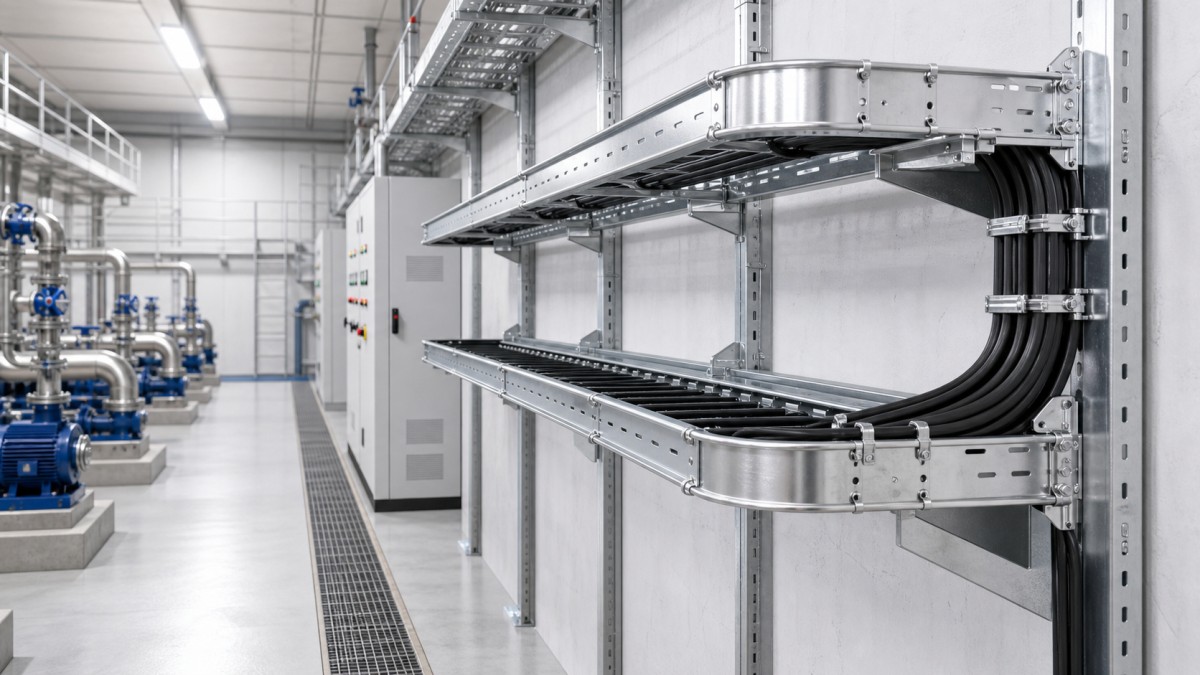
Water treatment plants and wastewater facilities are challenging environments for cable tray systems. Electrical routes may pass through pump rooms, chemical dosing areas, sludge treatment zones, outdoor tanks, pipe galleries, control buildings, and humid service corridors. In these locations, cable tray selection is not only a question of load capacity. Corrosion exposure, drainage, access, support design, and compatible accessories all affect long-term performance.
For EPC contractors, MEP engineers, and overseas procurement buyers, the safest approach is to specify cable tray as a complete system. Straight tray sections, bends, covers, brackets, splice plates, fasteners, and grounding-related components should be reviewed together. A tray that looks acceptable on a quotation can still create site problems if the finish is unsuitable, accessories are missing, or supports are not compatible with the plant environment.
Why Water and Wastewater Plants Need Careful Tray Selection
Unlike clean indoor commercial spaces, treatment plants often combine moisture, chemicals, temperature changes, corrosive gases, and frequent maintenance activity. Cable routes may run near pumps, valves, chemical tanks, ventilation systems, wet floors, or outdoor process areas. These conditions can accelerate corrosion and make inspection more difficult.
Drainage is especially important. A cable tray route that traps water or sludge can shorten service life and make maintenance unpleasant. Open access is also valuable because treatment plants often require periodic inspection, cable replacement, instrumentation upgrades, and operational changes over time.
Project teams should avoid treating all areas of the plant as one environment. A dry electrical control room, an outdoor pipe bridge, a chlorine or chemical dosing area, and a coastal pump station may each need a different material or finish strategy.
Choosing the Right Cable Tray Type
The correct tray type depends on route location, cable load, required protection, ventilation, drainage, and maintenance access. Many treatment plants use a combination of tray types.
Ladder Cable Tray
Ladder cable tray is often suitable for main power routes, pump feeders, motor control routes, and longer cable runs where ventilation and cable pulling access are important. The open rung structure helps reduce water accumulation and makes visual inspection easier. It is also practical where larger cables require strong mechanical support.
Perforated Cable Tray
Perforated cable tray provides a continuous bottom surface with ventilation and drainage openings. It is useful for smaller power cables, instrumentation circuits, auxiliary systems, and plant corridors where cables need more support than ladder tray provides. For wet areas, buyers should confirm drainage hole design and surface finish.
Cable Trunking or Trough Tray
Cable trunking and trough-style cable tray can protect control or communication cables from dust, contact, and local activity. However, fully enclosed routes in humid facilities should be reviewed carefully. Condensation, trapped moisture, and cleaning water can become long-term issues if drainage and cover details are not planned.
Wire Mesh Cable Tray
Wire mesh tray can be useful for lighter instrumentation or communication routes in accessible dry areas. In corrosive or washdown zones, material finish and support spacing should be checked carefully before selection.
Material and Finish Options for Corrosive Areas
Material selection should follow the actual exposure conditions. The tray body and accessories should be compatible; mixing materials without engineering review can create weak points in corrosion performance.
Hot-dip galvanized cable tray is often a practical option for many outdoor and general utility areas. Stainless steel may be more appropriate for chemical exposure, coastal air, or high-humidity zones where long service life is more important than the lowest initial cost.
Support Design and Drainage Details
Treatment plants contain many pipes, tanks, platforms, and equipment access paths. Cable tray supports must be coordinated with the plant structure, pipe racks, walkways, and maintenance clearances. A tray should not block valves, equipment removal paths, instrument panels, or access around pumps and blowers.
Support spacing should match tray load, cable weight, tray type, and project requirements. Long spans, vibration from nearby pumps, and outdoor wind exposure should be reviewed by the project engineer. Hold-down clamps, wall brackets, cantilever supports, and strut channels should be selected as part of the tray system.
Drainage should be considered before purchase. Perforated trays may need suitable drainage openings. Covers should be used only where they add value, such as protection from falling debris or direct contact. In wet areas, a cover that traps moisture may create more problems than it solves.
Documentation is also useful for maintenance teams. Drawings, route labels, material finish records, and accessory lists help the owner identify the correct replacement parts years after installation. For plants with multiple process areas, route-based labeling can prevent stainless steel accessories from being mixed with galvanized routes or standard indoor parts.
Accessories That Should Not Be Missed
Many installation delays come from missing small parts rather than missing straight tray lengths. A complete order for a water treatment project should include:
- Horizontal bends, vertical bends, tees, crosses, reducers, end plates, and drop-out points.
- Splice plates, couplers, bolts, nuts, washers, and bonding components where required.
- Wall brackets, trapeze supports, cantilever arms, channel supports, and hold-down clamps.
- Covers and cover clamps for selected routes exposed to falling objects or accidental contact.
- Compatible fasteners and repair materials for cut edges or damaged surface finish.
- Route labels, packing lists, and spare accessories for field adjustment.
Procurement Checklist for Treatment Plant Projects
- Separate plant areas by exposure: dry room, humid corridor, outdoor route, chemical area, or coastal environment.
- Confirm tray type by route: ladder, perforated, trunking, trough, or wire mesh.
- Specify material and finish for both tray body and accessories.
- Review cable load, support spacing, bend radius, drainage, and maintenance access.
- Confirm covers only where they are needed and compatible with ventilation and drainage.
- Order fittings, supports, brackets, splice plates, fasteners, and repair materials together.
- Ask suppliers for clear packaging and route-based labeling for easier installation.
Final Buying Advice
Water and wastewater projects need cable tray systems that can handle moisture, corrosion risk, maintenance access, and long operating life. The right tray is not simply the strongest or cheapest option. It is the system that matches the plant environment and arrives on site with the correct accessories.
HONGFENG / Cable Tray Pro can supply ladder cable tray, perforated cable tray, cable trunking, hot-dip galvanized tray, stainless steel tray, brackets, covers, and related accessories for water treatment and wastewater projects. Share your route layout, plant environment, tray size, and finish requirement, and our team can help prepare a practical cable tray proposal.