
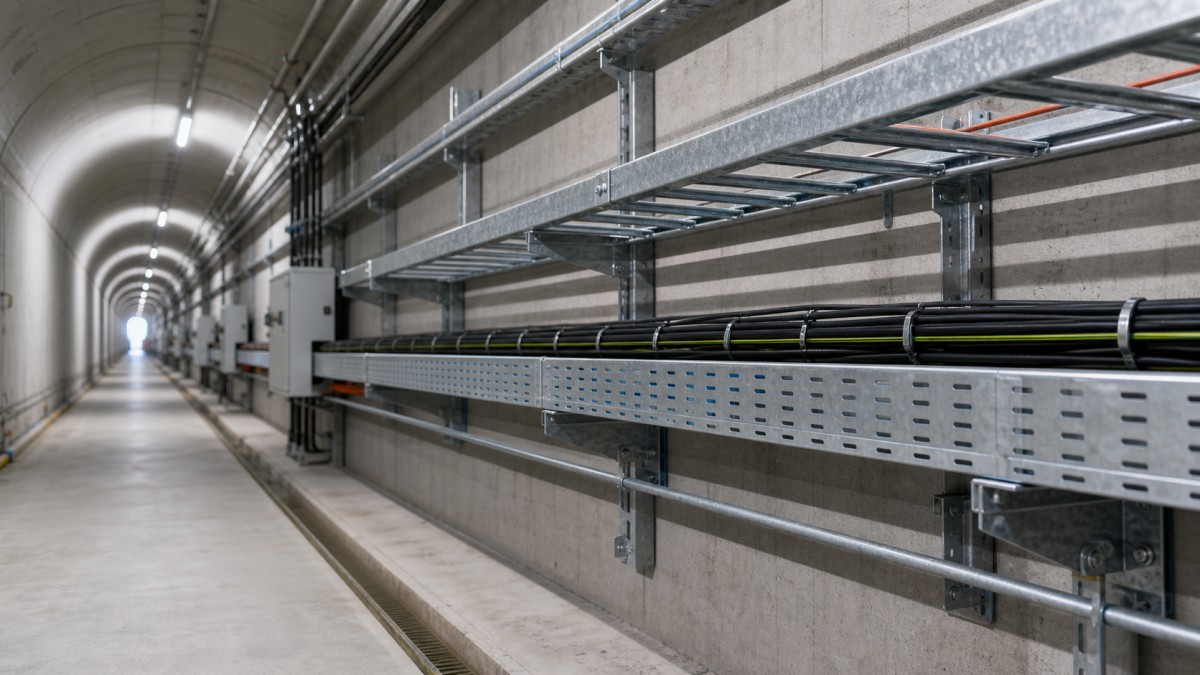
Tunnel and transportation infrastructure projects need cable tray systems that can support long routes, limited access, humid environments, vibration, and strict coordination with other building services. Cable trays may carry power, lighting, ventilation, communication, control, monitoring, and safety-related cables through road tunnels, rail tunnels, metro stations, underground utility corridors, and service galleries.
For contractors and procurement buyers, tunnel cable tray selection is different from a normal building project. Space is limited, installation windows are often short, and future maintenance access can be difficult. The tray system must be planned as a full route package with correct materials, supports, fittings, covers, and installation details.
Why Tunnel Cable Routes Need Early Coordination
Tunnels have dense service corridors. Cable trays may need to share space with ventilation ducts, drainage pipes, lighting, fire protection systems, communication cabinets, signage, monitoring equipment, and emergency systems. A small routing conflict can become expensive when the installation area is narrow and access equipment is limited.
Early coordination helps define tray elevation, support points, access clearances, cable separation, bend radius, expansion details, and installation sequence. It also helps procurement teams order route-specific fittings instead of relying on field cutting and urgent changes.
Long tunnel routes also require consistent installation quality. If supports, splice plates, covers, or fasteners are not supplied in the correct quantity, the delay can affect multiple construction activities.
Maintenance strategy should be considered from the beginning. Once a tunnel is operating, access windows may be limited to night work or planned shutdown periods. Cable tray routes should therefore allow inspection, cable identification, and repair without unnecessary dismantling of covers, brackets, or adjacent services. A clean cable pathway can reduce future service disruption.
Common Cable Tray Types for Tunnels
Tunnel projects often use different tray types for different cable groups and route areas. Selection should follow cable function, exposure, load, and maintenance needs.
Ladder Cable Tray
Ladder cable tray is suitable for larger power routes, ventilation equipment feeders, main distribution cables, and long utility corridors. Its open structure supports ventilation, inspection, and cable pulling. Load rating and support spacing should be checked carefully for long runs.
Perforated Cable Tray
Perforated cable tray provides more continuous bottom support while still allowing ventilation and drainage. It can be useful for lighting circuits, control cables, auxiliary systems, and station service areas where a more enclosed appearance is preferred.
Cable Trunking or Trough Tray
Cable trunking and trough tray provide more protection for communication, monitoring, and control cables. In tunnels, designers should confirm drainage, condensation management, and cable access before using fully enclosed routes for long sections.
Wire Mesh Cable Tray
Wire mesh tray can be useful for lighter low-voltage or communication routes in accessible service areas. Buyers should confirm the finish, load rating, support spacing, and whether the tray is appropriate for the tunnel environment.
Material and Finish for Underground Infrastructure
Tunnel cable tray systems may face humidity, water seepage, dust, cleaning activity, road salt, vibration, and limited ventilation. Material and finish should be selected for the actual tunnel environment and expected service life.
For many infrastructure projects, hot-dip galvanized tray is a practical baseline. Stainless steel should be considered where chloride exposure, standing moisture, or aggressive cleaning conditions create higher corrosion risk.
Support Design, Vibration, and Access
Tunnel supports should be coordinated with the tunnel structure and installation method. Wall brackets, ceiling supports, strut channels, cantilever arms, and hold-down clamps must match the route load and site conditions. Long routes should avoid excessive deflection and should remain accessible for inspection.
Vibration may be relevant in rail tunnels, road tunnels, and equipment rooms. The project engineer should review fixing methods, support spacing, and anti-loosening measures where required. In underground corridors, supports must also avoid drainage paths, walkways, emergency access, and equipment maintenance zones.
Installation sequence matters. If tray sections are delivered without route labels or if fittings are not packed by tunnel section, the contractor may spend additional time sorting materials in a constrained work area.
Designers should also consider route continuity at expansion joints, station interfaces, equipment rooms, and cross passages. These transition points often require special fittings, covers, brackets, or changes in tray direction. If they are not included in the bill of materials, installers may need to fabricate temporary solutions on site, which can reduce consistency and slow inspection approval.
Accessories and Route Components
A tunnel cable tray package should include all components needed for continuous installation. Common items include:
- Horizontal bends, vertical bends, tees, crosses, reducers, risers, and end plates.
- Splice plates, couplers, bolts, nuts, washers, and bonding components where specified.
- Covers and cover clamps for routes exposed to falling debris or accidental contact.
- Wall brackets, cantilever arms, ceiling supports, strut channels, and hold-down clamps.
- Barriers or separate tray routes for power, control, communication, and monitoring cables where required.
- Repair materials for cut edges, damaged coatings, and field adjustments.
For overseas procurement, packing control is especially important. Long tunnel projects may use repeated tray sizes and similar-looking fittings across many sections. Clear marks on bundles, route numbers on packing lists, and separate accessory boxes for each installation area can reduce sorting time and prevent missing parts from being discovered too late.
Procurement Checklist for Tunnel Projects
- Confirm route type: road tunnel, rail tunnel, metro station, utility gallery, or equipment room.
- Separate cable groups by function and project requirement.
- Review tray type, material, finish, load rating, side height, and support spacing.
- Coordinate tray route with ventilation, drainage, lighting, signage, fire protection, and communication systems.
- Confirm covers, drainage, access, vibration considerations, and field repair requirements.
- Order fittings, supports, brackets, splice plates, fasteners, and spare parts together.
- Request packing lists and labels by tunnel section or route number.
Final Buying Advice
Tunnel and transportation infrastructure projects need cable tray systems that are durable, coordinated, and easy to install under site constraints. The best procurement decision is not only about tray length or material price. It is about ordering a complete route system that matches corrosion exposure, cable load, support design, and maintenance access.
HONGFENG / Cable Tray Pro supplies ladder cable tray, perforated cable tray, cable trunking, wire mesh cable tray, hot-dip galvanized tray, stainless steel tray, covers, brackets, and accessories for infrastructure projects. Send your tunnel layout, cable route, tray size, material finish, and support requirements, and our team can help prepare a practical quotation.