
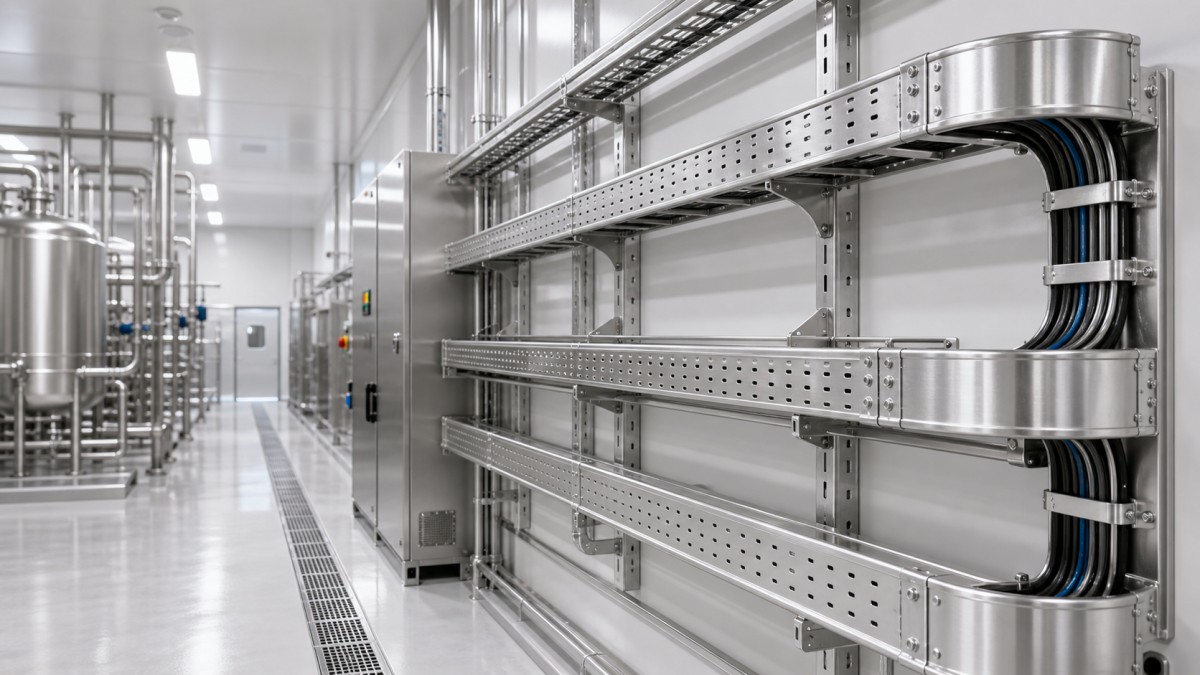
Food, beverage, and pharmaceutical facilities often require cable tray systems that can handle moisture, washdown activity, cleaning chemicals, corrosion risk, and strict maintenance expectations. In these environments, cable management is not only about supporting cables. It must also fit the plant’s hygiene, inspection, and operational requirements.
Stainless steel cable tray is frequently considered for these projects because it offers strong corrosion resistance and a clean industrial appearance. However, buyers should still specify the tray carefully. Stainless steel grade, tray type, supports, fasteners, covers, drainage, and installation access all affect the final result.
Why Food and Pharma Cable Routes Are Different
Food and pharmaceutical production areas may include wet cleaning, steam, humidity, temperature changes, packaging lines, process equipment, conveyors, and controlled rooms. Electrical routes often pass above machines, along service corridors, near washdown areas, or through utility spaces connected to production.
These routes need to remain accessible for inspection and maintenance. Cables may serve motors, sensors, control panels, safety devices, vision systems, packaging equipment, refrigeration, and building services. A poorly selected tray system can create corrosion problems, collect residue, or make cleaning and inspection more difficult.
Project teams should separate plant areas by exposure. A dry packaging hall, a wet processing room, a cold storage area, and a chemical cleaning zone may require different tray details even inside the same facility.
When Stainless Steel Cable Tray Is a Strong Option
Stainless steel cable tray is often selected where corrosion resistance and cleanability are important. It can be useful in washdown zones, high-humidity spaces, coastal food plants, beverage production, dairy processing, pharmaceutical utilities, and areas exposed to cleaning agents.
The grade of stainless steel should be specified according to the project environment. Buyers should not simply request “stainless steel cable tray” without confirming grade, fasteners, brackets, and fittings. The tray body may be stainless steel, but if bolts, splice plates, or supports are not compatible, the system can still develop weak points.
Stainless steel is not always required everywhere. Dry office-side routes or protected electrical rooms may use other finishes if allowed by the project specification. The most cost-effective design often uses stainless steel in demanding zones and another approved finish in dry protected areas.
Tray Type Selection for Production Areas
Ladder Cable Tray
Ladder cable tray is useful for main power routes and larger cable bundles. Its open structure provides ventilation and visibility. In wet or washdown areas, the open design can reduce trapped water compared with fully enclosed routes. Support spacing and cable load should still be checked carefully.
Perforated Cable Tray
Perforated stainless steel tray gives more continuous cable support while allowing drainage through openings. It can be useful for control cables, auxiliary circuits, packaging lines, and service corridors where a cleaner appearance is preferred.
Cable Trunking
Stainless steel cable trunking can protect smaller cables near machines, control panels, or local equipment. In wet areas, designers should consider condensation and cleaning water. Drainage and access covers should be reviewed before using enclosed trunking.
Wire Mesh Tray
Stainless steel wire mesh tray can be practical for lighter cable groups and routes that need flexible cable entry or exit. It should be reviewed for load capacity, support spacing, and suitability in areas where cleaning or product residue may be a concern.
Material and Finish Questions to Clarify
Support Design and Cleaning Access
Supports should be coordinated with equipment access, cleaning paths, and maintenance zones. Tray routes above production equipment should avoid blocking machine covers, lighting, ventilation, and service access. If cleaning staff need to reach the area, the tray should not create unnecessary traps or hard-to-clean corners.
Support spacing should match cable load, tray size, and project requirements. Wall brackets, trapeze supports, cantilever arms, and hold-down clamps should use compatible materials and finishes. In high-humidity or washdown areas, standard carbon steel supports can undermine the benefit of stainless steel tray.
Cleaning access should be reviewed with the facility team, not only the electrical designer. A cable tray route that is technically acceptable may still create problems if it blocks spray cleaning, inspection points, or machine maintenance. Smooth routing, clean supports, and clear access around production equipment can reduce maintenance effort after the plant starts operating.
Packaging and handling also deserve attention. Stainless steel surfaces can be scratched or contaminated during transport if tray sections are packed carelessly. Buyers should request protective packing, separation from carbon steel parts where appropriate, and clear identification of stainless steel fittings, brackets, and fasteners.
Documentation can help both installation and later maintenance. For projects with multiple production rooms, packing lists should identify the stainless steel grade, tray type, size, and accessory quantity by area. Maintenance teams can then reorder compatible parts later instead of guessing from a generic description. This is especially useful when the plant uses stainless steel in wet rooms but galvanized or coated tray in dry utility zones.
Accessories Buyers Should Include
- Stainless steel horizontal bends, vertical bends, tees, reducers, and end plates.
- Compatible splice plates, couplers, bolts, nuts, washers, and clamps.
- Covers and cover clamps only where the route needs additional protection.
- Wall brackets, trapeze supports, cantilever arms, and channel supports in matching material where required.
- Edge protection, cable drop-out points, and fittings for machine-side cable entry.
- Clear packing labels by production area, route, or installation zone.
Procurement Checklist
- Separate dry, wet, washdown, cold, chemical, and utility areas before selecting material.
- Confirm stainless steel grade and whether all accessories must match.
- Choose tray type by cable load, cleaning access, drainage, and route visibility.
- Review covers carefully so they do not trap moisture or block inspection.
- Specify support spacing, bracket type, and compatible fasteners.
- Ask for clean fabrication, protected packaging, and route-based labeling.
- Confirm drawings and bill of materials before production.
Final Buying Advice
Stainless steel cable tray can be a strong choice for food, beverage, and pharmaceutical facilities, especially where corrosion resistance, washdown exposure, and clean maintenance matter. The buyer should specify more than the tray body. Grade, fittings, supports, fasteners, covers, and drainage details should be reviewed as one complete system.
HONGFENG / Cable Tray Pro supplies stainless steel cable tray, ladder tray, perforated tray, wire mesh tray, cable trunking, covers, brackets, and related accessories for food, beverage, pharmaceutical, and clean industrial facilities. Share your plant environment, tray size, route layout, and material requirement, and our team can help prepare a practical quotation.