
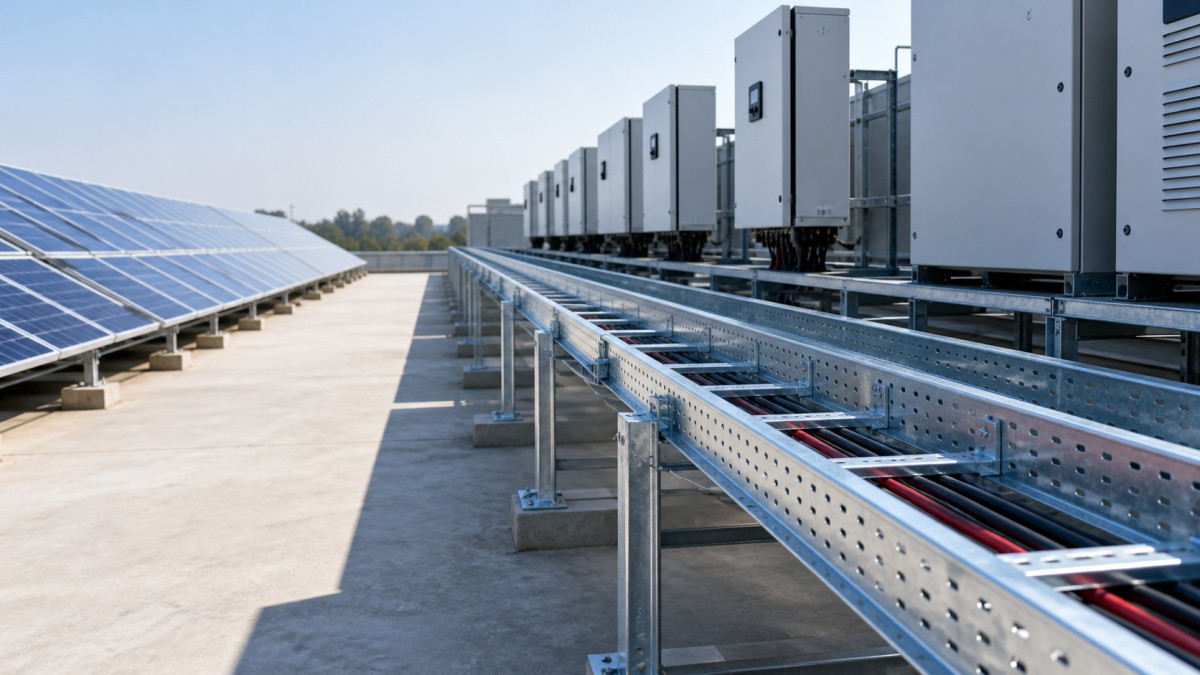
Solar PV projects need cable routes that can survive outdoor exposure, thermal movement, maintenance work, and long operating life. In many rooftop and ground-mount systems, cable tray is used to organize DC and AC cable routes, protect wiring where required, and give installers a repeatable pathway between arrays, combiner areas, inverters, transformers, and control equipment.
The correct tray choice depends on the project layout. A rooftop commercial PV system has different risks from a ground-mount solar farm. A coastal site is different from an inland factory roof. A short branch route is different from a long outdoor feeder route. For engineers and procurement buyers, the goal is to specify a complete tray system that matches the site environment, cable load, support method, and installation sequence.
Why Solar PV Cable Routes Are Different
Solar cable tray is usually exposed to sunlight, rain, temperature cycling, wind, dust, and site maintenance activity. On rooftops, trays may need to work around roof membranes, drainage paths, parapets, HVAC units, walkways, and mounting rails. On ground-mount projects, tray routes may run along long rows, cross equipment paths, or connect inverter stations across exposed terrain.
These conditions make material selection and support design especially important. Indoor tray assumptions do not always work outdoors. A tray that looks acceptable in a dry plant room may not be suitable for UV exposure, standing water, salt air, or repeated temperature changes.
Solar projects also need clean coordination between electrical design, structural support, installation labor, and maintenance access. Cable routes should be easy to inspect and should not create unnecessary sharp turns, trapped water, or hard-to-reach connection points.
Choosing Tray Type by Solar PV Route
Different parts of a solar PV project may require different cable containment solutions. The best design is usually based on route function rather than using one tray type everywhere.
Ladder Cable Tray
Ladder cable tray is useful for main cable routes where larger cable groups need support, ventilation, and easier pulling access. For outdoor inverter routes, equipment corridors, and long feeder sections, ladder tray can provide strength and open access when the support spacing and load rating are properly selected.
Perforated Cable Tray
Perforated cable tray provides more continuous cable support while still allowing ventilation and drainage through punched openings. It can be useful for smaller power routes, auxiliary circuits, rooftop service runs, and areas where cables need more bottom support than ladder tray provides.
Wire Mesh Cable Tray
Wire mesh cable tray can be practical for lighter cable groups, flexible route changes, and building-side cable management. It is often valued for visibility and easy cable entry or exit. Buyers should still confirm load rating, support spacing, finish, and environmental suitability before using it in exposed outdoor conditions.
Cable Trunking or Trough Tray
Cable trunking and trough-style tray provide more enclosure for selected routes, such as control wiring, communication cables, or building entry sections. In outdoor solar work, drainage and condensation management should be reviewed carefully before choosing a fully enclosed pathway.
Material and Finish for Outdoor PV Exposure
Material and finish decisions should be based on site exposure, expected service life, local owner requirements, and maintenance strategy. The tray body, fittings, covers, brackets, bolts, and splice plates should be treated as one system.
Hot-dip galvanized cable tray is often used for outdoor solar routes because it offers practical corrosion protection and mechanical strength. However, buyers should not treat all galvanized tray as equal. Confirm whether the product is galvanized after fabrication, how fittings are finished, and how cut or damaged areas will be repaired during installation.
Rooftop Solar Cable Tray Considerations
Rooftop PV cable tray design must respect the roof system. Supports should avoid damaging the waterproofing layer and should allow drainage. Tray routes should not block maintenance paths around panels, inverters, HVAC units, skylights, or roof access points. Where wind uplift or vibration may be a concern, support and hold-down details should be reviewed by the project engineer.
Thermal movement also matters. Rooftop tray runs can experience repeated expansion and contraction, especially where metal tray is exposed to direct sunlight. The layout should avoid unnecessary restraint and should use project-approved expansion details where required.
Tray covers may be needed in selected areas to protect cables from UV exposure, falling debris, or accidental contact. At the same time, covers can affect ventilation and drainage, so they should be specified only where they are useful and compatible with the cable design.
Ground-Mount Solar and Utility Route Considerations
Ground-mount solar projects often involve longer cable routes and more repetitive installation. The tray system should be easy to install, easy to inspect, and strong enough for the cable load and local support design. Long routes may require careful coordination with access roads, tracker systems, equipment pads, drainage channels, and inverter or transformer areas.
Outdoor ground routes should also consider corrosion from soil conditions, fertilizers, coastal air, industrial pollution, or nearby chemical exposure. If tray supports use a different material from the tray body, the project team should check whether mixed metals or incompatible finishes could create corrosion weak points.
For utility-scale projects, packaging and labeling can make a real difference on site. Bundling tray sections, fittings, and supports by route or area helps reduce installation confusion and avoids unnecessary handling.
Accessories and Support Details Buyers Should Confirm
A solar PV cable tray order should include the complete route system, not only straight tray sections. Common accessories include:
- Horizontal bends, vertical bends, tees, crosses, reducers, and end caps.
- Splice plates, couplers, bolts, nuts, washers, and grounding-related components where required.
- Covers and cover clamps for exposed or protected sections.
- Cantilever brackets, trapeze supports, strut channels, base supports, and hold-down clamps.
- Drainage details, cable drop-out points, and edge protection where cables enter or leave the tray.
- Touch-up or repair materials for cut edges and damaged finish areas.
Buyers should also ask for drawings, loading information, material finish confirmation, and packing lists that match the project bill of materials. This is especially important for overseas procurement, where missing small accessories can delay installation more than the tray body itself.
Procurement Checklist for Solar Cable Tray
- Identify route type: rooftop, ground-mount, inverter area, building entry, or equipment corridor.
- Confirm cable type, cable quantity, expected cable load, and future spare capacity.
- Select tray type by route: ladder, perforated, wire mesh, trunking, or trough tray.
- Specify material and finish for the real exposure environment.
- Review support spacing, bracket type, hold-down method, drainage, and expansion requirements.
- Confirm covers, fittings, splice plates, grounding details, and compatible fasteners.
- Request packaging and labeling by route or installation area for easier site handling.
Final Buying Advice
Solar PV cable tray selection should begin with the route environment and installation method. A rooftop project needs careful roof coordination and drainage planning. A ground-mount project needs durable outdoor support, corrosion protection, and efficient installation logistics. In both cases, the tray system should be purchased as a complete set of tray bodies, fittings, supports, covers, and accessories.
HONGFENG / Cable Tray Pro supplies ladder cable tray, perforated cable tray, wire mesh cable tray, cable trunking, hot-dip galvanized tray, stainless steel tray, covers, brackets, and accessories for solar PV and renewable energy projects. Share your drawings, route length, tray size, surface finish, and project environment, and our team can help prepare a practical cable tray solution for your next solar project.