
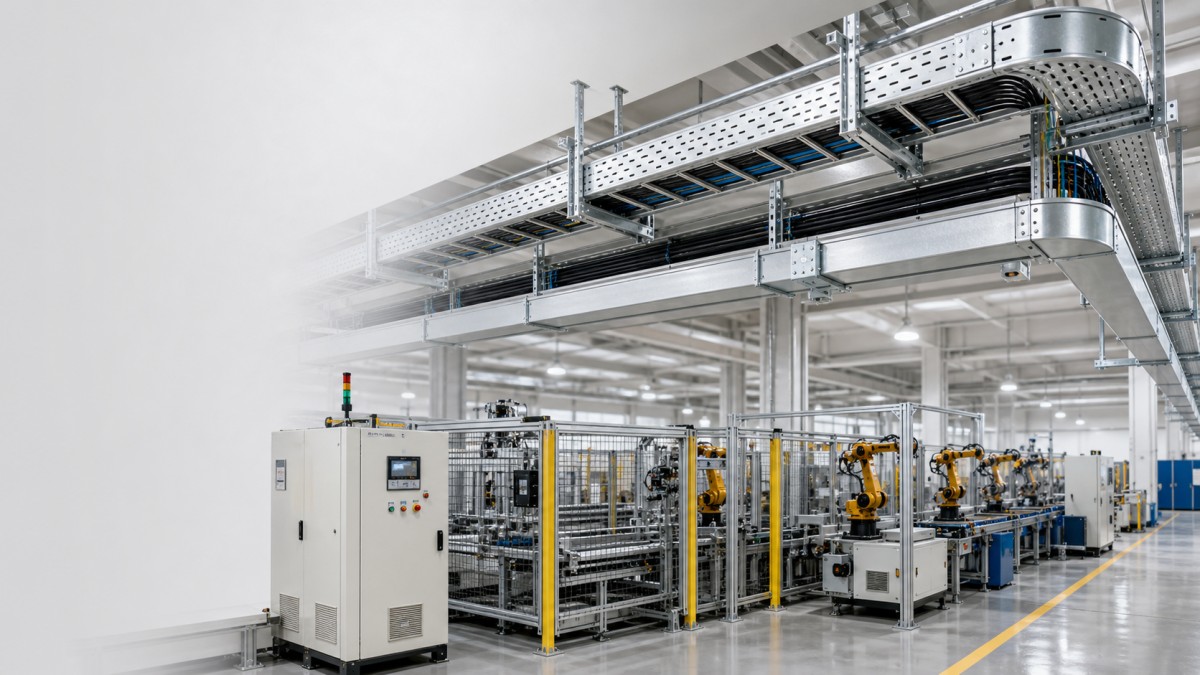
Smart factories and automated production lines use more electrical and communication routes than traditional workshops. A modern plant may include robot cells, conveyors, motor control centers, PLC cabinets, vision systems, sensors, safety devices, variable frequency drives, data networks, and energy monitoring equipment. Cable tray planning affects installation speed, maintenance access, cable separation, and future line modification.
For engineers and buyers, the main risk is treating cable tray as a simple commodity item. Factory automation projects need a tray system that matches power distribution, control wiring, network cabling, machine layout, and expansion plans. If the tray route is not planned early, installers may face congested pathways, difficult cable pulling, missing fittings, and unnecessary shutdown time during future upgrades.
Why Automation Projects Need Organized Cable Pathways
Automation systems depend on reliable power, control, and signal connections. Cable tray routes may connect switchgear, control panels, production equipment, packaging lines, warehouse automation, and building management systems. These routes must remain visible and accessible because factories change. Machines are moved, sensors are added, and production lines are modified as demand changes.
A well-planned cable tray system gives the plant a structured pathway for both current equipment and future additions. It also helps separate different cable groups, reduce installation confusion, and keep maintenance work more predictable. For international projects, a clear tray bill of materials also reduces procurement risk because fittings and supports can be ordered together with the tray body.
Tray Types Used in Smart Factory Projects
Different factory areas may need different cable tray styles. The best selection depends on cable type, route height, mechanical protection, cleaning requirements, and expected modification frequency.
Ladder Cable Tray
Ladder cable tray is widely used for main power routes, motor feeders, and heavier cable groups. It provides strong mechanical support, good ventilation, and convenient cable entry or exit. For routes above production lines or along utility corridors, ladder tray is often the first option to evaluate.
Perforated Cable Tray
Perforated cable tray provides more bottom support and a cleaner enclosed appearance while still allowing ventilation. It is useful for branch circuits, control panels, lighting routes, and mixed electrical areas where cables need more continuous support than ladder tray provides.
Wire Mesh Cable Tray
Wire mesh tray is often suitable for lighter signal, data, and control cable routes where frequent cable changes are expected. It gives good visibility and flexible cable exit points. Buyers should confirm load rating, finish, and support spacing before using it in areas with vibration or heavier cable bundles.
Cable Trunking
Cable trunking is useful where smaller cables need additional protection, a clean appearance, or separation from open production activity. It is often used near machine panels, office-to-factory transitions, or control cable routes. Trunking should be sized with spare capacity to avoid future congestion.
Power, Control, and Data Cable Separation
Smart factory projects often carry different cable types in the same general area. Power cables, motor cables, control cables, instrumentation cables, safety circuits, and communication cables may have different routing and separation requirements. The project engineer should define how these groups are separated by route, barrier, distance, or tray type.
Procurement teams should not assume one shared tray is suitable for every cable group. In many projects, it is better to use separate tray routes or tray barriers for different systems. This makes installation easier and supports future troubleshooting.
Material and Finish Selection Inside Factories
Factory environments vary widely. A clean electronics assembly area, automotive welding line, food processing hall, dusty workshop, and outdoor utility corridor do not require the same tray finish. The buyer should specify material by location instead of using one finish across the entire factory by habit.
Pre-galvanized steel tray may be suitable for dry indoor industrial areas. Hot-dip galvanized tray is often chosen for more demanding industrial or semi-outdoor routes. Stainless steel tray may be needed in washdown, coastal, chemical, food, or high-humidity environments. Powder-coated tray can support color identification or appearance requirements when the project environment is suitable.
Support Design and Factory Maintenance Access
Automation projects often require tray routes above conveyors, machines, platforms, and service aisles. Supports must avoid moving equipment, overhead cranes, maintenance access, and safety zones. The tray should not block panel doors, machine guards, ventilation openings, or equipment removal paths.
Support spacing should be selected according to tray load, cable weight, route height, and structural conditions. For long overhead routes, brackets, trapeze supports, strut channels, and hold-down clamps should be specified early. If the project uses modular machines or future line expansion, tray routes should include spare capacity and logical branching points.
Factory safety and housekeeping should also be considered. A tray route that is easy for installers may still be poor for daily operation if it blocks crane movement, creates a dust collection shelf above sensitive equipment, or makes maintenance staff work in unsafe positions. Before procurement, the route should be reviewed with production, maintenance, and EHS teams, not only the electrical designer.
Accessories Buyers Should Include
A factory automation tray order should include all parts needed for the installation route, not just straight lengths.
- Horizontal bends, vertical bends, tees, crosses, reducers, and end plates.
- Barriers or separate tray routes for power, control, and data separation where required.
- Couplers, splice plates, bolts, nuts, washers, and bonding components where specified.
- Covers for selected areas exposed to dust, falling objects, or accidental contact.
- Wall brackets, machine-side brackets, cantilever supports, trapeze supports, and clamps.
- Labels, route marking, and spare fittings for future modifications.
Procurement Checklist for Smart Factory Cable Tray
- Confirm machine layout, panel locations, cable groups, and expected future expansion.
- Separate main power, motor, control, instrumentation, safety, and data routes where required.
- Select tray type by route: ladder, perforated, wire mesh, or trunking.
- Confirm material and finish for each plant area.
- Review support spacing, route height, cable load, bend radius, and maintenance clearance.
- Include fittings, barriers, brackets, covers, splice plates, and fasteners in the quotation.
- Ask for route-based packaging and clear labels for faster site installation.
Final Buying Advice
Smart factory cable tray planning should support both current production and future change. The most successful projects define cable routes before procurement, separate cable groups where needed, and order a complete tray system with the right accessories. This reduces field modification and makes later maintenance easier.
HONGFENG / Cable Tray Pro supplies ladder cable tray, perforated cable tray, wire mesh cable tray, cable trunking, hot-dip galvanized tray, stainless steel tray, covers, brackets, and accessories for industrial automation and smart factory projects. Send your layout, cable groups, tray sizes, and finish requirements, and our team can help prepare a practical solution.