
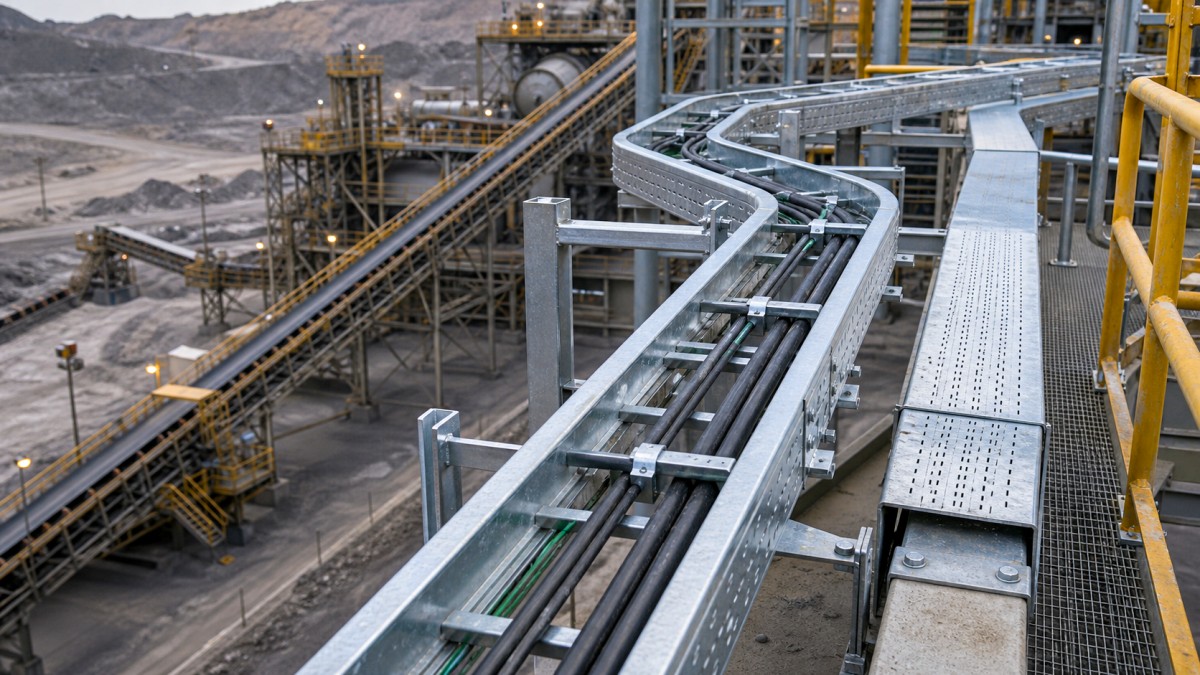
Mining and mineral processing plants place heavy demands on cable tray systems. Cable routes may run through crushing areas, conveyors, pump stations, flotation circuits, grinding mills, electrical rooms, stockyard equipment, control buildings, and outdoor utility corridors. The environment can include dust, vibration, water spray, chemical exposure, impact risk, temperature change, and limited maintenance windows.
For this reason, mining cable tray procurement should not be treated as a simple steel quantity order. A reliable package should cover tray type, material, surface finish, support system, covers, fittings, fasteners, corrosion protection, labeling, and packing by installation area. Missing accessories or under-specified supports can slow installation and create safety or maintenance problems later.
This guide is written for EPC contractors, mining project buyers, electrical distributors, maintenance teams, and overseas procurement buyers who need a practical way to specify cable tray systems for mineral processing and mining infrastructure.
Why Mining Environments Are Different
A mineral processing plant is not a clean commercial electrical room. Cable tray routes may pass through areas with moving equipment, airborne dust, vibration, washdown, chemical dosing, or corrosive process vapors. Outdoor routes may also face rain, sunlight, wind, and temperature swings. In some facilities, maintenance teams need to access trays frequently to add instruments, replace motor cables, or modify control circuits during plant upgrades.
These conditions affect almost every purchasing decision. A tray that looks acceptable in a warehouse may be too light for heavy motor cables, too open for dusty areas, or too difficult to maintain after installation. Buyers should ask how the tray will be used in each area instead of applying one standard item across the entire plant.
The project team should separate routes by environment: indoor electrical rooms, process halls, outdoor conveyors, chemical areas, washdown zones, and control building interfaces. Each zone may need a different tray type, finish, cover strategy, or support detail.
Choosing Tray Types by Plant Area
Mining projects often use several cable tray types. The best selection depends on cable size, route exposure, ventilation, dust protection, mechanical strength, and future maintenance needs.
Ladder Cable Tray
Ladder cable tray is often suitable for main power routes, motor feeder cables, and long runs through process areas. It provides strong support, good ventilation, and easy cable entry or exit. For mining plants with heavy cable bundles, buyers should confirm load rating, side rail height, rung spacing, support span, and bend radius before purchase.
Outdoor conveyor routes and process platforms may need heavy-duty ladder tray with covers or hold-down details. If cables are exposed to falling dust or debris, covers should be considered. If the route is near moving equipment, additional mechanical protection may be needed according to the project design.
Perforated Cable Tray
Perforated cable tray provides more continuous bottom support than ladder tray and can be useful for smaller power cables, control cables, instrumentation routes, and auxiliary circuits. It also allows some drainage and ventilation. In dusty or wet areas, buyers should confirm whether the perforation pattern, drain holes, covers, and cleaning access are appropriate.
Cable Trunking and Enclosed Routes
Cable trunking or trough cable tray can protect smaller cables from dust, accidental contact, or localized exposure. It is commonly used near control panels, junction boxes, building-side routes, or instrumentation areas. However, fully enclosed routes can trap heat, moisture, or dust if they are not designed carefully. For mining plants, trunking should be specified with drainage, cover fixing, access points, and cable fill in mind.
Material and Finish for Dust, Water, and Corrosion
Surface finish is one of the most important decisions in mining cable tray procurement. The right finish depends on whether the route is indoors or outdoors, dry or wet, clean or dusty, chemically aggressive or mild.
| Environment | Common Tray Option | Procurement Notes |
|---|---|---|
| Indoor electrical room | Pre-galvanized or hot-dip galvanized tray | Confirm load rating, cable segregation, and compatibility with room layout. |
| Outdoor conveyor or utility route | Hot-dip galvanized ladder tray with suitable supports | Review covers, hold-down clamps, wind exposure, and corrosion protection. |
| Wet process or washdown zone | Hot-dip galvanized or stainless steel tray | Confirm drainage, fastener material, and whether chemicals affect the finish. |
| Chemical or coastal mining area | Stainless steel or project-approved corrosion-resistant finish | Match tray, fittings, supports, bolts, nuts, and washers to the same corrosion environment. |
Hot-dip galvanized steel cable tray is often selected for outdoor and rugged industrial routes because it provides practical corrosion resistance and mechanical strength. Stainless steel may be preferred in chemical, coastal, high-humidity, or washdown areas. Buyers should confirm the full system, not only the tray body. A galvanized tray with incompatible fasteners or unprotected cut edges can become a weak point.
Support Systems and Vibration Considerations
Mining plants include conveyors, crushers, pumps, screens, motors, and rotating equipment. These can introduce vibration or movement near cable tray routes. Cable tray supports should therefore be more than an afterthought.
The support design should be coordinated with structural steel, platforms, concrete walls, and equipment foundations. Buyers should confirm bracket type, channel size, base plates, anchor details, support spacing, tray load, and any project-specific requirements for vibration or impact resistance. Where trays run along conveyors or elevated structures, route stability and maintenance access should be reviewed before production.
Splice plates, hold-down clamps, and support hardware should be included in the accessory schedule. If the installation contractor must fabricate supports on site because the purchase order only included tray lengths, the project may lose both time and consistency.
Covers, Cleaning Access, and Maintenance
Covers can protect cables from falling dust, debris, sunlight, or accidental contact. However, covers should not make maintenance impossible. Mining sites often need practical access for inspection, cleaning, cable replacement, and future expansion.
Buyers should decide where covers are required and where open tray is better. Peaked or sloped covers may help shed dust or water in some outdoor areas. Clamp-fixed covers may be needed where vibration or wind could move loose covers. For indoor dusty areas, removable covers and clear access space can be more useful than a sealed route that traps dust.
Maintenance teams should also be able to identify routes quickly. Route labels, packing marks, and tray section tags can reduce confusion during installation and later maintenance. This is especially valuable when the project includes multiple processing areas or phased expansion.
RFQ Checklist for Mining Cable Tray Buyers
A clear RFQ helps suppliers quote a complete and usable system. Buyers should include:
- Plant area, route type, indoor or outdoor location, and exposure condition
- Tray type, width, side height, material thickness, and surface finish
- Expected cable load, support span, and heavy-duty requirements
- Cable group information, including power, control, instrumentation, and communication routes
- Cover requirement by area, including cover type and fixing method
- Accessory schedule for bends, tees, reducers, splices, drop-outs, and supports
- Fastener material, corrosion protection, and cut-edge repair requirements
- Packing labels by area, drawing references, and documentation requirements
Buyers should also ask whether the supplier can provide compatible accessories and support items, not just tray bodies. For overseas mining projects, packing and labeling are especially important because missing parts may take weeks to replace.
Final Buying Advice
Mining and mineral processing plants need cable tray systems that are strong, corrosion-aware, easy to inspect, and complete enough for field installation. The best purchase is not always the cheapest tray per meter. It is the package that reduces installation delays, survives the site environment, and supports maintenance throughout the plant life.
HONGFENG / Cable Tray Pro can supply galvanized steel cable tray, stainless steel cable tray, ladder cable tray, perforated cable tray, cable trunking, covers, fittings, supports, and accessories for mining and industrial plant projects. For an accurate quotation, share route drawings, plant area information, cable load requirements, surface finish expectations, and accessory needs so the tray package can be built around the real site conditions.
Navigation
Send Us A Message
Get in touch with us
Phone