
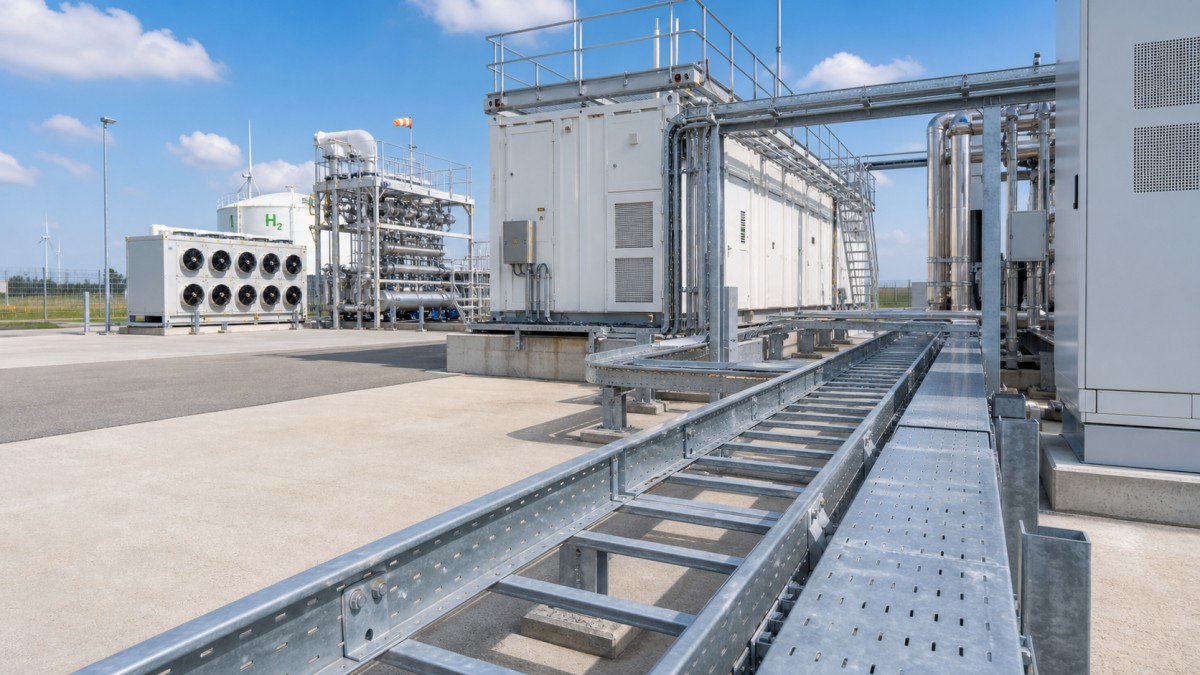
Hydrogen electrolyzer projects bring together power conversion equipment, water treatment, cooling systems, control cabinets, gas handling, safety systems, and outdoor utility routes. The cable tray package is only one part of the electrical scope, but mistakes in tray selection can affect installation speed, cable segregation, maintenance access, and long-term corrosion performance.
For procurement teams, the main challenge is that “industrial cable tray” is too broad as an RFQ description. A hydrogen plant may need ladder cable tray for power feeders, perforated cable tray for control and auxiliary circuits, cable trunking for protected indoor routes, stainless steel tray in demanding areas, and compatible supports, covers, bends, reducers, splice plates, and hold-down clamps. Buyers should treat the tray package as a routed system, not as a list of straight lengths.
Why Hydrogen Projects Need Early Cable Tray Coordination
Electrolyzer projects often include both indoor equipment rooms and outdoor skid areas. Cable routes may pass between rectifiers, transformers, electrolyzer stacks, cooling equipment, water treatment units, gas detection panels, emergency shutdown systems, and plant control rooms. These routes should be coordinated before procurement because tray type, support detail, and surface finish depend on the actual route environment.
Hydrogen also requires careful safety coordination. The cable tray itself is not a substitute for hazardous area classification, electrical protection, ventilation design, gas detection, or local code review. Those decisions belong to the project engineering team and authority having jurisdiction. However, the tray layout must respect the project area classification drawings, avoid unnecessary routing through sensitive zones, and allow inspection access after commissioning.
When tray routing is left until late procurement, installers may need field modifications, additional supports, unplanned bends, or mixed finishes. This can delay cable pulling and create inconsistent corrosion protection. A better RFQ includes route drawings, tray widths and depths, support spacing requirements, fitting types, finish requirements, and accessory quantities.
Selecting Tray Types for Power, Control, and Instrumentation
A hydrogen electrolyzer facility normally uses more than one tray type. The tray should match the cable size, loading, ventilation requirement, mechanical protection, and maintenance method.
Ladder Cable Tray
Ladder cable tray is usually the first option for larger power cables and longer industrial routes. It provides good ventilation and allows cable entry and exit along the route. For rectifier output, transformer connections, main AC feeders, and large DC or auxiliary power routes, ladder tray can provide a practical balance of strength, heat dissipation, and installation access.
Perforated Cable Tray
Perforated cable tray gives more continuous bottom support while still allowing drainage and some ventilation. It is often useful for control cables, auxiliary circuits, instrument cables, and smaller power cables. In areas where tools, dust, or minor impact may be a concern, covers may be specified, but the effect on heat dissipation and inspection access should be reviewed.
Cable Trunking or Trough Cable Tray
Cable trunking and trough-style tray can protect smaller cable groups in indoor electrical rooms, equipment skids, or building-side routes. They are useful where cable containment, separation, or appearance matters. For outdoor or humid areas, buyers should confirm drainage, condensation management, and cover design before using enclosed routes.
Material and Finish Choices for Hydrogen Plant Routes
Surface finish is a major purchasing decision because hydrogen projects may include outdoor exposure, water treatment rooms, coastal locations, chemical dosing areas, and equipment skids. The right finish depends on project location, service environment, owner specification, and expected maintenance interval.
Mixed materials can create weak points if they are selected without engineering review. The tray body, brackets, bolts, nuts, washers, splice plates, covers, and hold-down clamps should be specified as a compatible system.
Support, Load, and Routing Details Buyers Should Confirm
Support design is often where a low-price quotation becomes expensive on site. Cable tray supports must match cable load, tray span, building structure, outdoor wind exposure, seismic requirements where applicable, and maintenance access. Buyers should not assume that brackets are included unless the RFQ clearly lists them.
- Define tray width, side height, material thickness, and expected cable loading.
- Confirm straight lengths, horizontal bends, vertical bends, tees, crosses, reducers, covers, and end plates.
- Specify support type, support spacing, bracket finish, and anchor interface where known.
- Separate power, control, communication, and instrumentation routes according to project requirements.
- Check cover requirements for outdoor rain, falling objects, sunlight, dust, or owner maintenance policy.
- Request compatible splice plates, bonding jumpers where specified, fasteners, and installation accessories.
RFQ Checklist for Overseas Buyers
Overseas procurement buyers should make the RFQ easy to price and difficult to misunderstand. A clear package reduces freight surprises, site shortages, and inconsistent accessories.
- Project location and installation environment: indoor, outdoor, coastal, chemical, humid, or clean utility area.
- Tray type by route: ladder, perforated, trunking, wire mesh, or stainless steel.
- Material and surface finish, including requirements for fittings and supports.
- Tray width, height, thickness, length, and quantity by route or drawing reference.
- Fittings schedule: bends, tees, crosses, reducers, covers, end caps, and drop-outs.
- Support package: wall brackets, cantilever arms, strut channel, threaded rods, clamps, and fasteners.
- Packing requirements for export: bundle protection, labeling, container loading, and spare accessories.
For large electrolyzer projects, it is also useful to separate the bill of materials by area or skid interface. This helps the site team receive the correct tray, fittings, and supports for each installation phase. Route-based packing reduces confusion when multiple contractors are working around rectifiers, water treatment units, cooling equipment, and control buildings at the same time, especially during compressed commissioning schedules.
Final Buying Advice
For hydrogen electrolyzer plants, the best cable tray package is the one that fits the route, not only the unit price. Buyers should confirm tray type, finish, support design, and accessory compatibility before comparing quotations. A complete system quotation from HONGFENG / Cable Tray Pro can help EPC teams and overseas buyers reduce missing items and keep installation work more predictable.
If you are preparing an RFQ for a hydrogen, power-to-X, or industrial gas project, send your route drawings, tray schedule, finish requirement, and installation environment. Our team can help review a practical cable tray package for procurement discussion.