
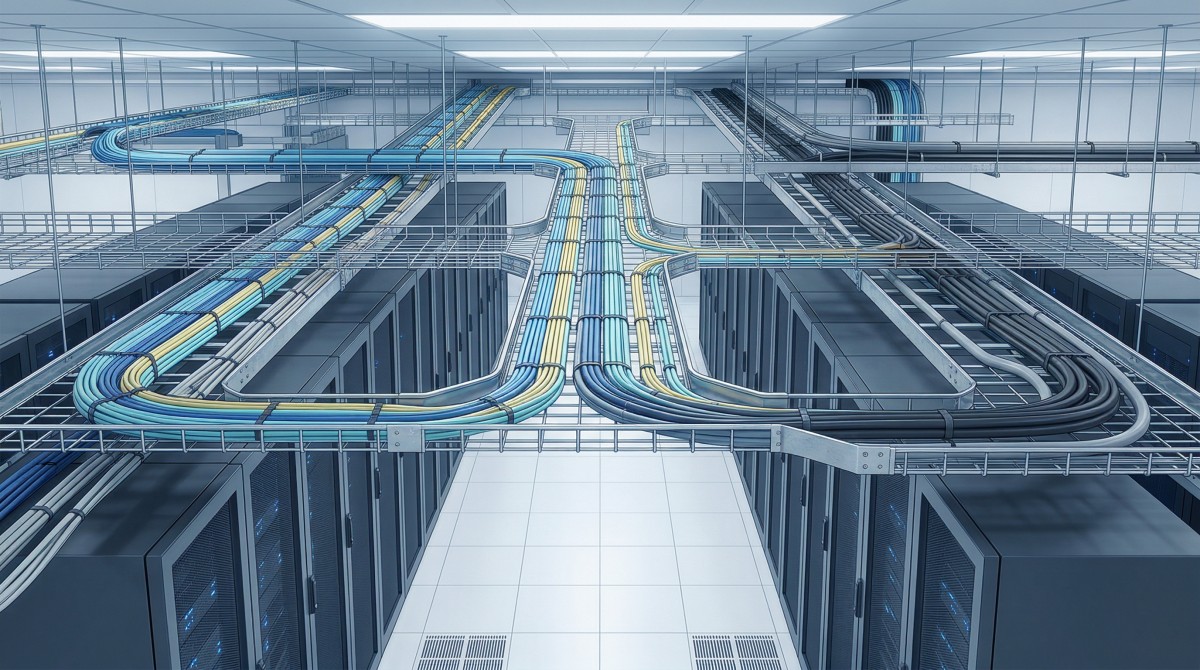
Figure 1. Modern data center cable management architecture using structured overhead cable tray pathways for scalable high-density infrastructure.
Data centers are entering a new infrastructure phase. Higher rack densities, stronger airflow requirements, faster deployment expectations, and growing demand for future flexibility are changing how teams think about cable routing and support. In this environment, cable management is no longer just a secondary installation detail. It is becoming part of the broader design conversation around scalability, maintainability, and thermal performance.
As a result, many operators, engineers, and specifiers are rethinking conventional cable pathway strategies and giving more attention to open, structured, and more adaptable cable tray-based systems.
Higher Rack Density Changes the Cable Management Problem
As rack densities rise, cable management becomes more demanding. Higher power loads, greater cable concentration, and denser routing paths place more pressure on the physical infrastructure that supports both power and data cables.
In lower-density environments, fixed and conventional cable pathways may still be workable for long periods. But in higher-density zones, the margin for congestion, poor access, and awkward future expansion becomes much smaller. This is why data center teams are paying closer attention to pathway flexibility from the beginning of the design process.
Flexibility Matters More Than It Used To
Traditional fixed-path solutions still have their place, but many new data center projects now place a much higher value on accessibility and reconfiguration speed. Infrastructure that is difficult to modify can slow expansion, complicate maintenance, and make future tenant or equipment changes more disruptive than necessary.
Open cable tray systems are increasingly attractive in this context because they allow easier access, clearer routing visibility, and more practical future additions. For facilities that grow in phases or regularly adapt to new equipment layouts, that flexibility has become a major design advantage.
Overhead Pathways Are Gaining More Attention
One of the clearest shifts in modern data center design is the growing emphasis on overhead cable routing. Overhead tray systems can improve access for installation and maintenance while reducing congestion in other parts of the facility.
This does not mean every project is moving to a single universal model. Underfloor pathways still remain relevant in some facilities, especially where existing infrastructure or specific airflow strategies support that layout. But in many new-build and high-density environments, overhead cable tray networks are becoming more attractive because they support easier expansion and clearer routing organization.
For designers, the real issue is not overhead versus underfloor as a simple trend choice. It is selecting the pathway strategy that best supports cooling, maintainability, and long-term growth for each part of the facility.
Airflow and Cooling Are Now Part of the Cable Discussion
As data center densities rise, cable management decisions increasingly affect cooling performance. Congested cable routes can interfere with airflow planning, reduce serviceability, and make thermal management more difficult in high-density zones.
This is one reason open and well-structured tray systems are gaining importance. They support more organized routing, reduce pathway confusion, and can better align with airflow-aware design strategies. In modern facilities, cable management is no longer only about support and containment. It is also part of how the building handles heat and future operational change.
What Modern Data Center Cable Management Looks Like
Although designs vary from project to project, several characteristics are becoming more common:
- structured overhead cable tray pathways
- clear separation of different cable types or routing zones
- pathways designed for future adds, moves, and changes
- greater emphasis on accessibility for maintenance teams
- more deliberate alignment between cable routing and airflow strategy
These changes reflect a broader move toward cable infrastructure that can evolve with the facility rather than limit it.
What This Means for Cable Tray Suppliers
For cable tray manufacturers and suppliers, the data center market increasingly expects more than standard product availability. Buyers want systems that can support dense cable loads, integrate into coordinated routing strategies, and remain practical for future expansion.
Technical support is becoming more important as well. Project teams increasingly expect documentation, layout support, engineering coordination, and product options that fit modern data center requirements rather than generic cable support only.
Suppliers that can support design flexibility, installation efficiency, and scalable infrastructure planning are better positioned in this market than those offering materials alone.
The Real Shift
The most accurate way to describe the current market is not that data centers are abandoning traditional cable management everywhere. It is that they are rethinking it.
Existing facilities still operate with a wide range of pathway strategies, and not every project has the same density or flexibility requirements. But in the parts of the market where higher density, faster deployment, and future adaptability matter most, more open and structured cable tray-based approaches are becoming increasingly important.
Conclusion
Cable management decisions now sit much closer to the center of data center design than they did a decade ago. Higher density deployments, cooling constraints, and stronger demands for scalability are pushing project teams to look for cable pathways that are easier to access, easier to expand, and better aligned with modern infrastructure needs.
For many new projects, that makes cable tray systems not just an alternative to conventional methods, but an increasingly practical choice for scalable data center growth.
Looking for cable tray solutions for data center projects? Contact our team for product catalogs, project support, and application recommendations.
Navigation
Send Us A Message
Get in touch with us
Phone