
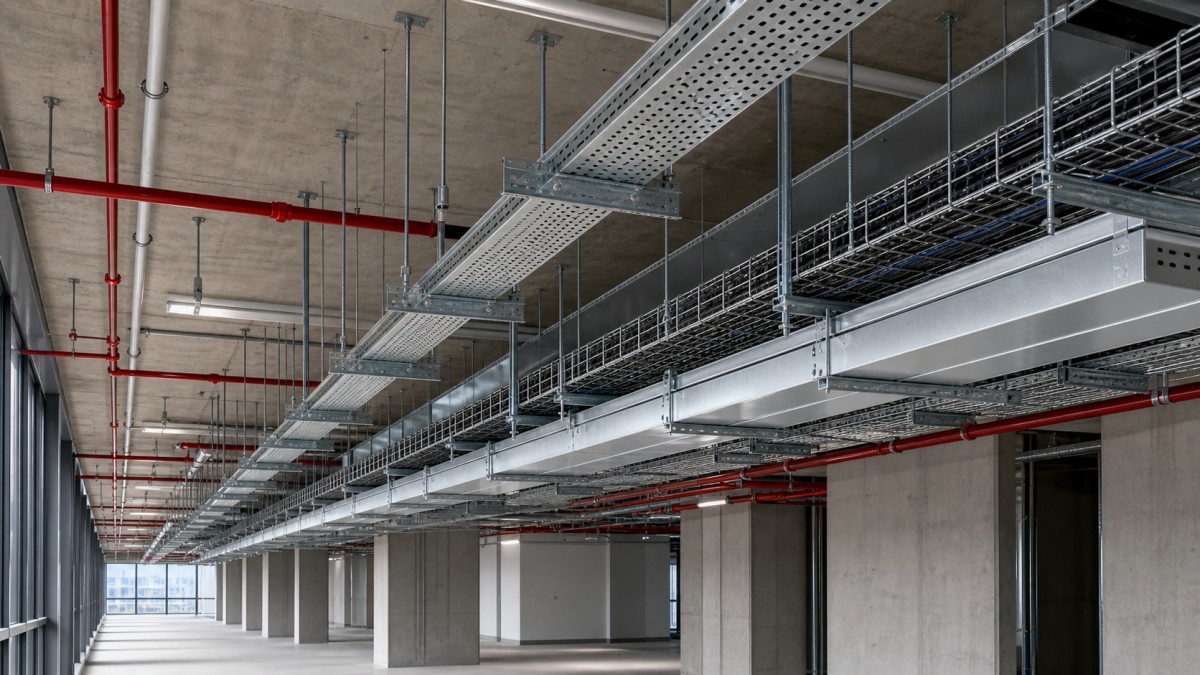
Commercial high-rise buildings rely on a large number of electrical and low-voltage systems. Power distribution, lighting, fire alarm, access control, CCTV, communication, building automation, elevators, tenant fit-out, and emergency systems all need clear cable pathways. If cable tray and cable trunking are specified late, the project can face ceiling conflicts, missing fittings, difficult maintenance, and inconsistent installation quality.
For MEP contractors and procurement teams, the goal is not simply to buy tray lengths. The goal is to build a coordinated cable management system that fits the building structure, ceiling space, risers, equipment rooms, tenant areas, and future maintenance needs. This may include perforated cable tray, wire mesh cable tray, cable trunking, ladder tray in service areas, covers, supports, bends, reducers, dividers, fasteners, and labels.
This article explains how buyers can specify cable tray and trunking systems for commercial towers, hotels, hospitals, offices, mixed-use buildings, and similar projects.
Why High-Rise Cable Management Needs Coordination
High-rise buildings have limited service space. Cable routes often share ceiling voids and riser shafts with HVAC ducts, chilled water pipes, fire protection pipes, drainage, lighting, ceiling supports, and access panels. A cable tray route that is not coordinated with other MEP services can become difficult or impossible to install.
Coordination should begin before procurement. The design team should identify main horizontal routes, vertical risers, equipment room routes, branch routes, tenant distribution points, and areas that require access for future changes. The tray type and support method should match the available space and the maintenance strategy.
For buyers, this means the RFQ should include layout drawings, tray schedule, ceiling constraints, riser details, system separation requirements, and finish expectations. A vague request for commercial cable tray does not give the supplier enough information to quote a complete package.
Where Cable Tray and Trunking Are Used
Different parts of a building need different cable management products. A single tray type rarely fits every route.
Main Electrical and Low-Voltage Corridors
Perforated cable tray is commonly used for main horizontal routes above ceilings, in service corridors, and inside electrical rooms. It provides cable support, some ventilation, and an organized pathway for multiple systems. Where cables need separation, dividers or parallel trays may be required according to the project design.
Telecom, Data, and Flexible Fit-Out Areas
Wire mesh cable tray can be useful for communication, data, and low-voltage routes where many branch drops or future changes are expected. It is lightweight, easy to cut, and convenient for open ceiling or accessible ceiling areas. Buyers should confirm load capacity, finish, support spacing, bend treatment, and compatibility with project requirements.
Tenant Areas and Protected Branch Routes
Cable trunking or trough cable tray can protect smaller cable groups in tenant areas, corridors, equipment rooms, and wall-mounted routes. Enclosed trunking may be selected where neat appearance, dust protection, or controlled access is important. Buyers should confirm cover type, branch fittings, internal dividers, and installation access before purchase.
Risers and Vertical Routes
Vertical risers require special attention because cable weight, fixing method, fire compartment coordination, and inspection access are all important. The tray or trunking must be coordinated with the structural opening, riser room layout, cable support method, and local code requirements. Buyers should not assume that horizontal tray accessories will solve vertical installation details.
Choosing Tray Type for Building Systems
| Building Route | Common Product | Key Buying Considerations |
|---|---|---|
| Main electrical room or service corridor | Perforated cable tray or ladder cable tray | Confirm load, cable grouping, support spacing, bends, covers, and future capacity. |
| Data and low-voltage routes | Wire mesh cable tray or perforated tray | Review branch drops, cable separation, bend radius, and accessibility. |
| Tenant branch circuits | Cable trunking or trough cable tray | Confirm cover access, dividers, fittings, and clean installation appearance. |
| Riser shaft | Project-specified tray or trunking system | Coordinate vertical cable support, fire stopping, inspection access, and floor penetrations. |
Tray type should be selected by function. Power routes may need stronger trays and more careful cable fill review. Low-voltage routes may need flexibility and frequent branch access. Fire alarm and life safety systems may have specific separation or installation requirements based on local code and project specifications. These requirements should be confirmed by the project engineer before procurement.
Material, Finish, and Appearance
Most commercial building routes are indoors, so pre-galvanized steel or galvanized steel tray is commonly used. However, finish selection should still be considered carefully. Mechanical rooms, car parks, basements, rooftop plant rooms, kitchens, laundry areas, and coastal buildings may expose tray systems to moisture or corrosive conditions.
For visible areas, powder-coated tray or trunking may be specified for appearance or color identification. For service areas, galvanized finish may be sufficient if the environment is dry and controlled. For wet, coastal, or corrosive zones, stainless steel or a project-approved corrosion-resistant finish may be required.
Buyers should also confirm that fittings, covers, supports, bolts, nuts, washers, and splice plates match the tray finish. A good-looking tray body with poor-quality fasteners can still create problems during maintenance.
Support Systems and Ceiling Coordination
Support systems are critical in high-rise buildings because ceiling space is crowded. Common support methods include threaded rods, channel supports, wall brackets, trapeze supports, and special brackets for risers or equipment rooms. The support method must be coordinated with the building structure and other MEP services.
Before ordering, buyers should confirm support spacing, load requirement, tray width, available ceiling height, access panel locations, and whether tray covers must be removable. In corridors, support locations should avoid lighting, sprinklers, diffusers, and access hatches. In plant rooms, tray routes should allow safe access to valves, panels, and equipment.
Installation teams also need suitable fittings. Horizontal bends, vertical bends, tees, crosses, reducers, end plates, drop-outs, and trunking branch fittings should be included in the package. If these are missing, installers may cut and modify parts on site, which can reduce quality and waste time.
Common Procurement Mistakes
Commercial building cable tray problems often appear late because the tray package is treated as a small accessory order. Buyers can avoid many issues by watching for these mistakes:
- Ordering straight tray lengths without a complete fitting schedule
- Using one tray type for power, data, risers, and tenant branches without checking function
- Ignoring support hardware until installation begins
- Forgetting covers, dividers, reducers, end plates, or drop-out fittings
- Not coordinating tray routes with HVAC, fire protection, and ceiling access
- Mixing finishes or fasteners that do not match the building environment
- Leaving future tenant changes out of the route capacity plan
A complete RFQ should include the tray schedule, layout drawings, material and finish requirements, accessory list, support method, packing labels, and any project-specific inspection or documentation requirements.
Final Buying Advice
For high-rise buildings, cable tray and trunking should make the electrical installation easier to build, inspect, modify, and maintain. The best system is not the one with the lowest item price; it is the one that fits the MEP layout, includes the necessary accessories, and avoids field improvisation.
HONGFENG / Cable Tray Pro can support commercial building and MEP buyers with perforated cable tray, wire mesh cable tray, ladder cable tray, cable trunking, covers, fittings, supports, and accessories. For a practical quotation, share the project drawings, route schedule, ceiling constraints, finish requirement, and accessory list so the package can be prepared as a complete building cable management system.
Navigation
Send Us A Message
Get in touch with us
Phone