
BESS Cable Tray Selection Guide for Outdoor Projects
2026-05-28

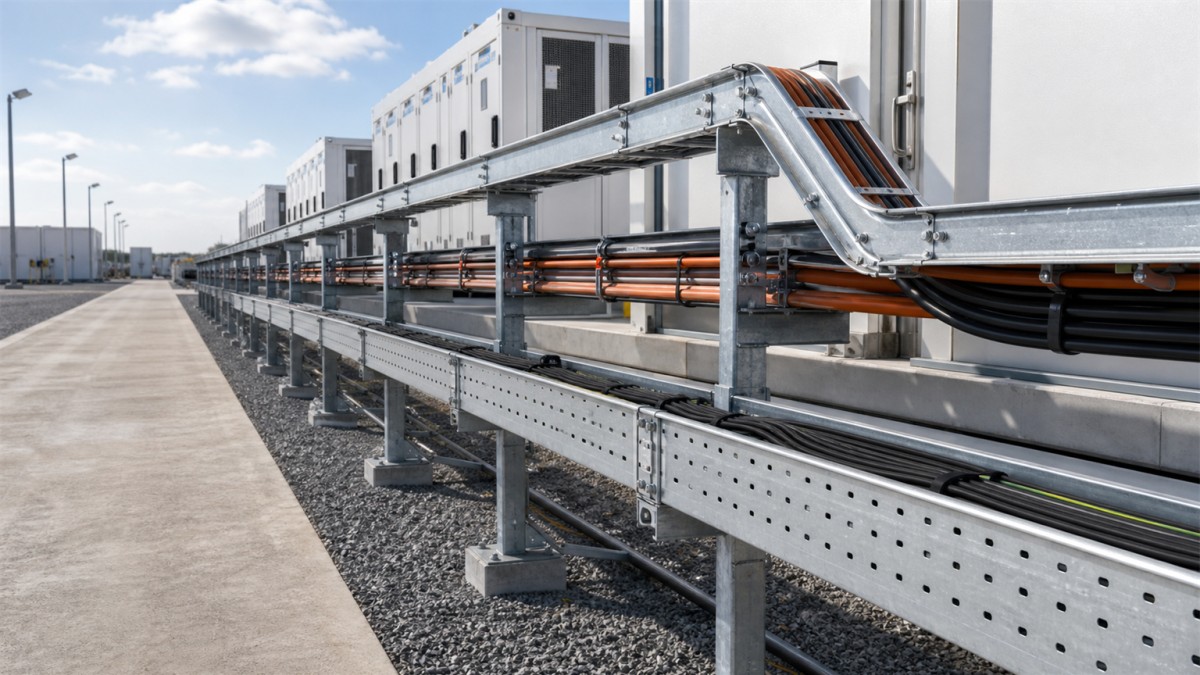
Hot-dip galvanized cable tray system installed along an outdoor battery energy storage facility corridor

Battery energy storage systems are moving from pilot projects into regular utility, industrial, and commercial infrastructure. For EPC contractors, electrical engineers, and procurement teams, this changes the way cable management should be specified. A BESS site may look modular from the outside, but the cabling between battery containers, power conversion systems, transformers, auxiliary panels, communication cabinets, fire detection equipment, and monitoring devices still needs a reliable mechanical support system.

Cable tray is often selected late in the project, after major electrical equipment has already been confirmed. That can create practical problems: insufficient tray width, unclear corrosion protection, missing covers, weak support details, poor access for maintenance, or accessories that do not match the installation route. In an outdoor battery storage project, these small specification gaps can become costly site delays.

This guide explains how to select cable tray systems for BESS projects with a practical focus on tray type, material finish, support design, accessories, routing, and procurement checks. It is written for buyers who need a clear technical basis before requesting quotations or approving shop drawings.

Why BESS Projects Need Careful Cable Tray Planning

A battery storage site is different from a standard indoor electrical room. Many projects use outdoor containerized battery units and skid-mounted power conversion equipment. Cable routes may run across open yards, under canopies, along equipment corridors, through inverter areas, or into control buildings. The tray system must support this layout while remaining accessible for inspection and future maintenance.

The cable tray design should be coordinated with electrical, structural, fire safety, civil, and operation teams. This is especially important where routes cross service roads, connect equipment on different foundations, or pass through areas exposed to rain, dust, salt air, chemical vapors, or strong sunlight.

For B2B buyers, the key point is simple: the cheapest cable tray item is not always the lowest project cost. A tray with the wrong finish, missing fittings, or insufficient support detail can increase installation labor, delay cable pulling, and require rework on site. Early coordination helps procurement teams buy a complete system instead of a list of isolated tray lengths.

Selecting the Right Cable Tray Type

BESS projects often use more than one tray type. The best choice depends on cable size, heat dissipation, environmental exposure, routing complexity, and maintenance requirements.

Ladder Cable Tray

Ladder cable tray is widely used for main power cable routes because it provides strong mechanical support, good ventilation, and easy cable entry or exit. It is suitable for longer outdoor runs and heavier cable bundles when the support span and load rating are properly specified. For BESS projects with DC cables, AC output cables, or feeder cables between major equipment, ladder tray is usually the first option to evaluate.

Perforated Cable Tray

Perforated cable tray gives more bottom support than ladder tray while still allowing drainage and some ventilation. It can be useful for smaller power cables, auxiliary circuits, signal cables, and control routes. In exposed outdoor areas, covers may be required depending on the project environment and cable protection strategy.

Cable Trunking or Trough Cable Tray

Cable trunking and trough-style cable tray can provide more enclosure for control cables, communication cables, or building-side routes. They are often used where cables need additional protection from dust, accidental contact, or nearby equipment activity. For outdoor BESS sites, drainage, ventilation, and condensation management should be considered before using a fully enclosed route.

Material and Surface Finish for Outdoor Exposure

Most BESS cable tray routes are exposed to outdoor conditions. Surface finish is therefore one of the most important purchasing decisions. The correct finish depends on the project location, expected service environment, owner specification, and local code requirements.

OptionBest UseKey Buying Notes
Hot-dip galvanized steel cable trayOutdoor utility, industrial, and infrastructure routes where stronger corrosion protection is requiredConfirm galvanizing method, coating quality, drain holes where needed, and compatible galvanized fittings and supports.
Pre-galvanized steel cable trayIndoor or mild dry environments with limited exposureCheck whether cut edges, punched areas, and outdoor exposure are acceptable under the project specification.
Stainless steel cable trayCoastal, chemical, high-humidity, or demanding industrial environmentsConfirm stainless grade, fastener material, and whether all accessories match the corrosion environment.
Powder-coated cable trayProjects needing color identification or additional surface protection in controlled environmentsVerify coating thickness, pretreatment, scratch resistance, and suitability for the installation location.

Hot-dip galvanized cable tray is often selected for outdoor battery storage projects because it offers a practical balance of mechanical strength, corrosion resistance, and cost. However, not every galvanized product performs the same way. Buyers should confirm whether the tray is galvanized after fabrication, whether fittings and supports use compatible finishes, and how damaged areas or cut edges will be repaired during installation.

In coastal or chemical environments, stainless steel may be a better long-term choice. The tray body, brackets, bolts, nuts, washers, splice plates, and hold-down clamps should be reviewed as a complete system. Mixing materials without engineering approval can create weak points in corrosion performance.

Support Design, Load, and Route Stability

Cable tray is not only a containment product. It is a structural support system for electrical cabling. In BESS projects, support design must account for cable weight, tray weight, fittings, covers, wind exposure, maintenance activity, thermal expansion, vibration from nearby equipment, and any project-specific seismic or structural requirements.

Before ordering, the buyer should request or confirm the following information:

  • Tray width, depth, material thickness, and load class required by the design.
  • Support span and bracket type for straight runs, bends, risers, and equipment entries.
  • Whether covers, hold-down clips, divider plates, or cable clamps are required.
  • Foundation, steel structure, or wall fixing details for each route section.
  • Allowance for future cable additions without overloading the tray.
  • Bonding or grounding requirements defined by the project electrical design.

A common mistake is quoting tray lengths without support hardware. This may look cheaper at the purchasing stage, but it leaves the installer to solve bracket spacing, elevation changes, and equipment entry details on site. For overseas buyers, it is better to send layout drawings, cable schedules, environmental conditions, and preferred standards to the manufacturer before final quotation.

Accessories That Should Not Be Treated as Afterthoughts

The reliability of a cable tray route depends heavily on accessories. A BESS project may require horizontal bends, vertical bends, tees, crosses, reducers, splice plates, fish plates, covers, cover clamps, dividers, hold-down clamps, wall brackets, floor stands, cantilever arms, channel supports, grounding jumpers, and custom transition pieces.

Accessories should match the tray series and finish. If the main tray is hot-dip galvanized, the fittings and support parts should normally be supplied with compatible protection. If stainless steel is specified, fasteners and brackets also need attention. A stainless tray installed with unsuitable bolts or mild-steel brackets can lose the corrosion advantage that justified the material cost.

For BESS routes, covers and clamps deserve special review. Outdoor trays may need covers to reduce direct rain, falling debris, sunlight exposure, or accidental cable disturbance. At the same time, covers can affect ventilation and maintenance access. The project engineer should decide where covers are required and where open ventilation is preferred.

Practical Procurement Checklist for BESS Cable Tray

Before approving a cable tray order for a battery energy storage project, procurement teams should check more than the unit price. A complete technical inquiry helps avoid mismatch between engineering drawings, site conditions, and supplied materials.

  • Project environment: indoor, outdoor, coastal, desert, high-humidity, chemical, or industrial exposure.
  • Tray type: ladder, perforated, trough, trunking, wire mesh, or a combination by route.
  • Material and finish: hot-dip galvanized steel, pre-galvanized steel, stainless steel, or coated steel.
  • Dimensions: width, height, thickness, length, bend radius, and route elevation.
  • Load requirements: cable weight, support spacing, covers, future capacity, and project load criteria.
  • Accessories: bends, tees, reducers, splice plates, covers, clamps, dividers, brackets, and fasteners.
  • Compliance basis: project specifications, local electrical code, and applicable cable tray product standards such as IEC 61537 or NEMA VE 1 when required by the contract.
  • Documentation: drawings, datasheets, material certificates where applicable, packing list, and installation guidance.
  • Export packing: bundle protection, labeling, container loading plan, and protection for galvanized or stainless surfaces during transport.

This checklist is especially useful for overseas procurement. Cable tray looks simple, but a complete shipment may include hundreds of different parts. Clear part numbering and packing labels can reduce sorting time at the jobsite and help installers find the correct fittings quickly.

Final Buying Advice

For BESS projects, cable tray selection should start from the route and environment, not only from a price list. Main outdoor power routes often benefit from hot-dip galvanized ladder cable tray because of its strength, ventilation, and practical corrosion protection. Perforated cable tray, trough tray, or cable trunking may be better for auxiliary, control, or building-side routes. In coastal or aggressive industrial environments, stainless steel cable tray should be considered early rather than treated as a late upgrade.

The safest purchasing approach is to request a system quotation: trays, fittings, covers, supports, splice hardware, clamps, and documentation together. This gives engineers a clearer basis for approval and gives buyers better control over delivery completeness.

HONGFENG / Cable Tray Pro can support BESS, solar, industrial, and infrastructure cable tray inquiries with ladder cable tray, perforated cable tray, cable trunking, hot-dip galvanized cable tray, stainless steel cable tray, and matching accessories. Share your cable schedule, layout drawings, environmental conditions, and project specification, and our team can help prepare a practical cable tray proposal for review.

Hot-dip galvanized cable tray system installed along an outdoor battery energy storage facility corridor

Battery energy storage systems are moving from pilot projects into regular utility, industrial, and commercial infrastructure. For EPC contractors, electrical engineers, and procurement teams, this changes the way cable management should be specified. A BESS site may look modular from the outside, but the cabling between battery containers, power conversion systems, transformers, auxiliary panels, communication cabinets, fire detection equipment, and monitoring devices still needs a reliable mechanical support system.

Cable tray is often selected late in the project, after major electrical equipment has already been confirmed. That can create practical problems: insufficient tray width, unclear corrosion protection, missing covers, weak support details, poor access for maintenance, or accessories that do not match the installation route. In an outdoor battery storage project, these small specification gaps can become costly site delays.

This guide explains how to select cable tray systems for BESS projects with a practical focus on tray type, material finish, support design, accessories, routing, and procurement checks. It is written for buyers who need a clear technical basis before requesting quotations or approving shop drawings.

Why BESS Projects Need Careful Cable Tray Planning

A battery storage site is different from a standard indoor electrical room. Many projects use outdoor containerized battery units and skid-mounted power conversion equipment. Cable routes may run across open yards, under canopies, along equipment corridors, through inverter areas, or into control buildings. The tray system must support this layout while remaining accessible for inspection and future maintenance.

The cable tray design should be coordinated with electrical, structural, fire safety, civil, and operation teams. This is especially important where routes cross service roads, connect equipment on different foundations, or pass through areas exposed to rain, dust, salt air, chemical vapors, or strong sunlight.

For B2B buyers, the key point is simple: the cheapest cable tray item is not always the lowest project cost. A tray with the wrong finish, missing fittings, or insufficient support detail can increase installation labor, delay cable pulling, and require rework on site. Early coordination helps procurement teams buy a complete system instead of a list of isolated tray lengths.

Selecting the Right Cable Tray Type

BESS projects often use more than one tray type. The best choice depends on cable size, heat dissipation, environmental exposure, routing complexity, and maintenance requirements.

Ladder Cable Tray

Ladder cable tray is widely used for main power cable routes because it provides strong mechanical support, good ventilation, and easy cable entry or exit. It is suitable for longer outdoor runs and heavier cable bundles when the support span and load rating are properly specified. For BESS projects with DC cables, AC output cables, or feeder cables between major equipment, ladder tray is usually the first option to evaluate.

Perforated Cable Tray

Perforated cable tray gives more bottom support than ladder tray while still allowing drainage and some ventilation. It can be useful for smaller power cables, auxiliary circuits, signal cables, and control routes. In exposed outdoor areas, covers may be required depending on the project environment and cable protection strategy.

Cable Trunking or Trough Cable Tray

Cable trunking and trough-style cable tray can provide more enclosure for control cables, communication cables, or building-side routes. They are often used where cables need additional protection from dust, accidental contact, or nearby equipment activity. For outdoor BESS sites, drainage, ventilation, and condensation management should be considered before using a fully enclosed route.

Material and Surface Finish for Outdoor Exposure

Most BESS cable tray routes are exposed to outdoor conditions. Surface finish is therefore one of the most important purchasing decisions. The correct finish depends on the project location, expected service environment, owner specification, and local code requirements.

OptionBest UseKey Buying Notes
Hot-dip galvanized steel cable trayOutdoor utility, industrial, and infrastructure routes where stronger corrosion protection is requiredConfirm galvanizing method, coating quality, drain holes where needed, and compatible galvanized fittings and supports.
Pre-galvanized steel cable trayIndoor or mild dry environments with limited exposureCheck whether cut edges, punched areas, and outdoor exposure are acceptable under the project specification.
Stainless steel cable trayCoastal, chemical, high-humidity, or demanding industrial environmentsConfirm stainless grade, fastener material, and whether all accessories match the corrosion environment.
Powder-coated cable trayProjects needing color identification or additional surface protection in controlled environmentsVerify coating thickness, pretreatment, scratch resistance, and suitability for the installation location.

Hot-dip galvanized cable tray is often selected for outdoor battery storage projects because it offers a practical balance of mechanical strength, corrosion resistance, and cost. However, not every galvanized product performs the same way. Buyers should confirm whether the tray is galvanized after fabrication, whether fittings and supports use compatible finishes, and how damaged areas or cut edges will be repaired during installation.

In coastal or chemical environments, stainless steel may be a better long-term choice. The tray body, brackets, bolts, nuts, washers, splice plates, and hold-down clamps should be reviewed as a complete system. Mixing materials without engineering approval can create weak points in corrosion performance.

Support Design, Load, and Route Stability

Cable tray is not only a containment product. It is a structural support system for electrical cabling. In BESS projects, support design must account for cable weight, tray weight, fittings, covers, wind exposure, maintenance activity, thermal expansion, vibration from nearby equipment, and any project-specific seismic or structural requirements.

Before ordering, the buyer should request or confirm the following information:

  • Tray width, depth, material thickness, and load class required by the design.
  • Support span and bracket type for straight runs, bends, risers, and equipment entries.
  • Whether covers, hold-down clips, divider plates, or cable clamps are required.
  • Foundation, steel structure, or wall fixing details for each route section.
  • Allowance for future cable additions without overloading the tray.
  • Bonding or grounding requirements defined by the project electrical design.

A common mistake is quoting tray lengths without support hardware. This may look cheaper at the purchasing stage, but it leaves the installer to solve bracket spacing, elevation changes, and equipment entry details on site. For overseas buyers, it is better to send layout drawings, cable schedules, environmental conditions, and preferred standards to the manufacturer before final quotation.

Accessories That Should Not Be Treated as Afterthoughts

The reliability of a cable tray route depends heavily on accessories. A BESS project may require horizontal bends, vertical bends, tees, crosses, reducers, splice plates, fish plates, covers, cover clamps, dividers, hold-down clamps, wall brackets, floor stands, cantilever arms, channel supports, grounding jumpers, and custom transition pieces.

Accessories should match the tray series and finish. If the main tray is hot-dip galvanized, the fittings and support parts should normally be supplied with compatible protection. If stainless steel is specified, fasteners and brackets also need attention. A stainless tray installed with unsuitable bolts or mild-steel brackets can lose the corrosion advantage that justified the material cost.

For BESS routes, covers and clamps deserve special review. Outdoor trays may need covers to reduce direct rain, falling debris, sunlight exposure, or accidental cable disturbance. At the same time, covers can affect ventilation and maintenance access. The project engineer should decide where covers are required and where open ventilation is preferred.

Practical Procurement Checklist for BESS Cable Tray

Before approving a cable tray order for a battery energy storage project, procurement teams should check more than the unit price. A complete technical inquiry helps avoid mismatch between engineering drawings, site conditions, and supplied materials.

  • Project environment: indoor, outdoor, coastal, desert, high-humidity, chemical, or industrial exposure.
  • Tray type: ladder, perforated, trough, trunking, wire mesh, or a combination by route.
  • Material and finish: hot-dip galvanized steel, pre-galvanized steel, stainless steel, or coated steel.
  • Dimensions: width, height, thickness, length, bend radius, and route elevation.
  • Load requirements: cable weight, support spacing, covers, future capacity, and project load criteria.
  • Accessories: bends, tees, reducers, splice plates, covers, clamps, dividers, brackets, and fasteners.
  • Compliance basis: project specifications, local electrical code, and applicable cable tray product standards such as IEC 61537 or NEMA VE 1 when required by the contract.
  • Documentation: drawings, datasheets, material certificates where applicable, packing list, and installation guidance.
  • Export packing: bundle protection, labeling, container loading plan, and protection for galvanized or stainless surfaces during transport.

This checklist is especially useful for overseas procurement. Cable tray looks simple, but a complete shipment may include hundreds of different parts. Clear part numbering and packing labels can reduce sorting time at the jobsite and help installers find the correct fittings quickly.

Final Buying Advice

For BESS projects, cable tray selection should start from the route and environment, not only from a price list. Main outdoor power routes often benefit from hot-dip galvanized ladder cable tray because of its strength, ventilation, and practical corrosion protection. Perforated cable tray, trough tray, or cable trunking may be better for auxiliary, control, or building-side routes. In coastal or aggressive industrial environments, stainless steel cable tray should be considered early rather than treated as a late upgrade.

The safest purchasing approach is to request a system quotation: trays, fittings, covers, supports, splice hardware, clamps, and documentation together. This gives engineers a clearer basis for approval and gives buyers better control over delivery completeness.

HONGFENG / Cable Tray Pro can support BESS, solar, industrial, and infrastructure cable tray inquiries with ladder cable tray, perforated cable tray, cable trunking, hot-dip galvanized cable tray, stainless steel cable tray, and matching accessories. Share your cable schedule, layout drawings, environmental conditions, and project specification, and our team can help prepare a practical cable tray proposal for review.

Battery energy storage systems are moving from pilot projects into regular utility, industrial, and commercial infrastructure. For EPC contractors, electrical engineers, and procurement teams, this changes the way cable management should be specified. A BESS site may look modular from the outside, but the cabling between battery containers, power conversion systems, transformers, auxiliary panels, communication cabinets, fire detection equipment, and monitoring devices still needs a reliable mechanical support system.

Cable tray is often selected late in the project, after major electrical equipment has already been confirmed. That can create practical problems: insufficient tray width, unclear corrosion protection, missing covers, weak support details, poor access for maintenance, or accessories that do not match the installation route. In an outdoor battery storage project, these small specification gaps can become costly site delays.

This guide explains how to select cable tray systems for BESS projects with a practical focus on tray type, material finish, support design, accessories, routing, and procurement checks. It is written for buyers who need a clear technical basis before requesting quotations or approving shop drawings.

Why BESS Projects Need Careful Cable Tray Planning

A battery storage site is different from a standard indoor electrical room. Many projects use outdoor containerized battery units and skid-mounted power conversion equipment. Cable routes may run across open yards, under canopies, along equipment corridors, through inverter areas, or into control buildings. The tray system must support this layout while remaining accessible for inspection and future maintenance.

The cable tray design should be coordinated with electrical, structural, fire safety, civil, and operation teams. This is especially important where routes cross service roads, connect equipment on different foundations, or pass through areas exposed to rain, dust, salt air, chemical vapors, or strong sunlight.

For B2B buyers, the key point is simple: the cheapest cable tray item is not always the lowest project cost. A tray with the wrong finish, missing fittings, or insufficient support detail can increase installation labor, delay cable pulling, and require rework on site. Early coordination helps procurement teams buy a complete system instead of a list of isolated tray lengths.

Selecting the Right Cable Tray Type

BESS projects often use more than one tray type. The best choice depends on cable size, heat dissipation, environmental exposure, routing complexity, and maintenance requirements.

Ladder Cable Tray

Ladder cable tray is widely used for main power cable routes because it provides strong mechanical support, good ventilation, and easy cable entry or exit. It is suitable for longer outdoor runs and heavier cable bundles when the support span and load rating are properly specified. For BESS projects with DC cables, AC output cables, or feeder cables between major equipment, ladder tray is usually the first option to evaluate.

Perforated Cable Tray

Perforated cable tray gives more bottom support than ladder tray while still allowing drainage and some ventilation. It can be useful for smaller power cables, auxiliary circuits, signal cables, and control routes. In exposed outdoor areas, covers may be required depending on the project environment and cable protection strategy.

Cable Trunking or Trough Cable Tray

Cable trunking and trough-style cable tray can provide more enclosure for control cables, communication cables, or building-side routes. They are often used where cables need additional protection from dust, accidental contact, or nearby equipment activity. For outdoor BESS sites, drainage, ventilation, and condensation management should be considered before using a fully enclosed route.

Material and Surface Finish for Outdoor Exposure

Most BESS cable tray routes are exposed to outdoor conditions. Surface finish is therefore one of the most important purchasing decisions. The correct finish depends on the project location, expected service environment, owner specification, and local code requirements.

OptionBest UseKey Buying Notes
Hot-dip galvanized steel cable trayOutdoor utility, industrial, and infrastructure routes where stronger corrosion protection is requiredConfirm galvanizing method, coating quality, drain holes where needed, and compatible galvanized fittings and supports.
Pre-galvanized steel cable trayIndoor or mild dry environments with limited exposureCheck whether cut edges, punched areas, and outdoor exposure are acceptable under the project specification.
Stainless steel cable trayCoastal, chemical, high-humidity, or demanding industrial environmentsConfirm stainless grade, fastener material, and whether all accessories match the corrosion environment.
Powder-coated cable trayProjects needing color identification or additional surface protection in controlled environmentsVerify coating thickness, pretreatment, scratch resistance, and suitability for the installation location.

Hot-dip galvanized cable tray is often selected for outdoor battery storage projects because it offers a practical balance of mechanical strength, corrosion resistance, and cost. However, not every galvanized product performs the same way. Buyers should confirm whether the tray is galvanized after fabrication, whether fittings and supports use compatible finishes, and how damaged areas or cut edges will be repaired during installation.

In coastal or chemical environments, stainless steel may be a better long-term choice. The tray body, brackets, bolts, nuts, washers, splice plates, and hold-down clamps should be reviewed as a complete system. Mixing materials without engineering approval can create weak points in corrosion performance.

Support Design, Load, and Route Stability

Cable tray is not only a containment product. It is a structural support system for electrical cabling. In BESS projects, support design must account for cable weight, tray weight, fittings, covers, wind exposure, maintenance activity, thermal expansion, vibration from nearby equipment, and any project-specific seismic or structural requirements.

Before ordering, the buyer should request or confirm the following information:

  • Tray width, depth, material thickness, and load class required by the design.
  • Support span and bracket type for straight runs, bends, risers, and equipment entries.
  • Whether covers, hold-down clips, divider plates, or cable clamps are required.
  • Foundation, steel structure, or wall fixing details for each route section.
  • Allowance for future cable additions without overloading the tray.
  • Bonding or grounding requirements defined by the project electrical design.

A common mistake is quoting tray lengths without support hardware. This may look cheaper at the purchasing stage, but it leaves the installer to solve bracket spacing, elevation changes, and equipment entry details on site. For overseas buyers, it is better to send layout drawings, cable schedules, environmental conditions, and preferred standards to the manufacturer before final quotation.

Accessories That Should Not Be Treated as Afterthoughts

The reliability of a cable tray route depends heavily on accessories. A BESS project may require horizontal bends, vertical bends, tees, crosses, reducers, splice plates, fish plates, covers, cover clamps, dividers, hold-down clamps, wall brackets, floor stands, cantilever arms, channel supports, grounding jumpers, and custom transition pieces.

Accessories should match the tray series and finish. If the main tray is hot-dip galvanized, the fittings and support parts should normally be supplied with compatible protection. If stainless steel is specified, fasteners and brackets also need attention. A stainless tray installed with unsuitable bolts or mild-steel brackets can lose the corrosion advantage that justified the material cost.

For BESS routes, covers and clamps deserve special review. Outdoor trays may need covers to reduce direct rain, falling debris, sunlight exposure, or accidental cable disturbance. At the same time, covers can affect ventilation and maintenance access. The project engineer should decide where covers are required and where open ventilation is preferred.

Practical Procurement Checklist for BESS Cable Tray

Before approving a cable tray order for a battery energy storage project, procurement teams should check more than the unit price. A complete technical inquiry helps avoid mismatch between engineering drawings, site conditions, and supplied materials.

  • Project environment: indoor, outdoor, coastal, desert, high-humidity, chemical, or industrial exposure.
  • Tray type: ladder, perforated, trough, trunking, wire mesh, or a combination by route.
  • Material and finish: hot-dip galvanized steel, pre-galvanized steel, stainless steel, or coated steel.
  • Dimensions: width, height, thickness, length, bend radius, and route elevation.
  • Load requirements: cable weight, support spacing, covers, future capacity, and project load criteria.
  • Accessories: bends, tees, reducers, splice plates, covers, clamps, dividers, brackets, and fasteners.
  • Compliance basis: project specifications, local electrical code, and applicable cable tray product standards such as IEC 61537 or NEMA VE 1 when required by the contract.
  • Documentation: drawings, datasheets, material certificates where applicable, packing list, and installation guidance.
  • Export packing: bundle protection, labeling, container loading plan, and protection for galvanized or stainless surfaces during transport.

This checklist is especially useful for overseas procurement. Cable tray looks simple, but a complete shipment may include hundreds of different parts. Clear part numbering and packing labels can reduce sorting time at the jobsite and help installers find the correct fittings quickly.

Final Buying Advice

For BESS projects, cable tray selection should start from the route and environment, not only from a price list. Main outdoor power routes often benefit from hot-dip galvanized ladder cable tray because of its strength, ventilation, and practical corrosion protection. Perforated cable tray, trough tray, or cable trunking may be better for auxiliary, control, or building-side routes. In coastal or aggressive industrial environments, stainless steel cable tray should be considered early rather than treated as a late upgrade.

The safest purchasing approach is to request a system quotation: trays, fittings, covers, supports, splice hardware, clamps, and documentation together. This gives engineers a clearer basis for approval and gives buyers better control over delivery completeness.

HONGFENG / Cable Tray Pro can support BESS, solar, industrial, and infrastructure cable tray inquiries with ladder cable tray, perforated cable tray, cable trunking, hot-dip galvanized cable tray, stainless steel cable tray, and matching accessories. Share your cable schedule, layout drawings, environmental conditions, and project specification, and our team can help prepare a practical cable tray proposal for review.


Battery energy storage systems are moving from pilot projects into regular utility, industrial, and commercial infrastructure. For EPC contractors, electrical engineers, and procurement teams, this changes the way cable management should be specified. A BESS site may look modular from the outside, but the cabling between battery containers, power conversion systems, transformers, auxiliary panels, communication cabinets, fire detection equipment, and monitoring devices still needs a reliable mechanical support system.

Cable tray is often selected late in the project, after major electrical equipment has already been confirmed. That can create practical problems: insufficient tray width, unclear corrosion protection, missing covers, weak support details, poor access for maintenance, or accessories that do not match the installation route. In an outdoor battery storage project, these small specification gaps can become costly site delays.

This guide explains how to select cable tray systems for BESS projects with a practical focus on tray type, material finish, support design, accessories, routing, and procurement checks. It is written for buyers who need a clear technical basis before requesting quotations or approving shop drawings.

Why BESS Projects Need Careful Cable Tray Planning

A battery storage site is different from a standard indoor electrical room. Many projects use outdoor containerized battery units and skid-mounted power conversion equipment. Cable routes may run across open yards, under canopies, along equipment corridors, through inverter areas, or into control buildings. The tray system must support this layout while remaining accessible for inspection and future maintenance.

The cable tray design should be coordinated with electrical, structural, fire safety, civil, and operation teams. This is especially important where routes cross service roads, connect equipment on different foundations, or pass through areas exposed to rain, dust, salt air, chemical vapors, or strong sunlight.

For B2B buyers, the key point is simple: the cheapest cable tray item is not always the lowest project cost. A tray with the wrong finish, missing fittings, or insufficient support detail can increase installation labor, delay cable pulling, and require rework on site. Early coordination helps procurement teams buy a complete system instead of a list of isolated tray lengths.

Selecting the Right Cable Tray Type

BESS projects often use more than one tray type. The best choice depends on cable size, heat dissipation, environmental exposure, routing complexity, and maintenance requirements.

Ladder Cable Tray

Ladder cable tray is widely used for main power cable routes because it provides strong mechanical support, good ventilation, and easy cable entry or exit. It is suitable for longer outdoor runs and heavier cable bundles when the support span and load rating are properly specified. For BESS projects with DC cables, AC output cables, or feeder cables between major equipment, ladder tray is usually the first option to evaluate.

Perforated Cable Tray

Perforated cable tray gives more bottom support than ladder tray while still allowing drainage and some ventilation. It can be useful for smaller power cables, auxiliary circuits, signal cables, and control routes. In exposed outdoor areas, covers may be required depending on the project environment and cable protection strategy.

Cable Trunking or Trough Cable Tray

Cable trunking and trough-style cable tray can provide more enclosure for control cables, communication cables, or building-side routes. They are often used where cables need additional protection from dust, accidental contact, or nearby equipment activity. For outdoor BESS sites, drainage, ventilation, and condensation management should be considered before using a fully enclosed route.

Material and Surface Finish for Outdoor Exposure

Most BESS cable tray routes are exposed to outdoor conditions. Surface finish is therefore one of the most important purchasing decisions. The correct finish depends on the project location, expected service environment, owner specification, and local code requirements.

OptionBest UseKey Buying Notes
Hot-dip galvanized steel cable trayOutdoor utility, industrial, and infrastructure routes where stronger corrosion protection is requiredConfirm galvanizing method, coating quality, drain holes where needed, and compatible galvanized fittings and supports.
Pre-galvanized steel cable trayIndoor or mild dry environments with limited exposureCheck whether cut edges, punched areas, and outdoor exposure are acceptable under the project specification.
Stainless steel cable trayCoastal, chemical, high-humidity, or demanding industrial environmentsConfirm stainless grade, fastener material, and whether all accessories match the corrosion environment.
Powder-coated cable trayProjects needing color identification or additional surface protection in controlled environmentsVerify coating thickness, pretreatment, scratch resistance, and suitability for the installation location.

Hot-dip galvanized cable tray is often selected for outdoor battery storage projects because it offers a practical balance of mechanical strength, corrosion resistance, and cost. However, not every galvanized product performs the same way. Buyers should confirm whether the tray is galvanized after fabrication, whether fittings and supports use compatible finishes, and how damaged areas or cut edges will be repaired during installation.

In coastal or chemical environments, stainless steel may be a better long-term choice. The tray body, brackets, bolts, nuts, washers, splice plates, and hold-down clamps should be reviewed as a complete system. Mixing materials without engineering approval can create weak points in corrosion performance.

Support Design, Load, and Route Stability

Cable tray is not only a containment product. It is a structural support system for electrical cabling. In BESS projects, support design must account for cable weight, tray weight, fittings, covers, wind exposure, maintenance activity, thermal expansion, vibration from nearby equipment, and any project-specific seismic or structural requirements.

Before ordering, the buyer should request or confirm the following information:

  • Tray width, depth, material thickness, and load class required by the design.
  • Support span and bracket type for straight runs, bends, risers, and equipment entries.
  • Whether covers, hold-down clips, divider plates, or cable clamps are required.
  • Foundation, steel structure, or wall fixing details for each route section.
  • Allowance for future cable additions without overloading the tray.
  • Bonding or grounding requirements defined by the project electrical design.

A common mistake is quoting tray lengths without support hardware. This may look cheaper at the purchasing stage, but it leaves the installer to solve bracket spacing, elevation changes, and equipment entry details on site. For overseas buyers, it is better to send layout drawings, cable schedules, environmental conditions, and preferred standards to the manufacturer before final quotation.

Accessories That Should Not Be Treated as Afterthoughts

The reliability of a cable tray route depends heavily on accessories. A BESS project may require horizontal bends, vertical bends, tees, crosses, reducers, splice plates, fish plates, covers, cover clamps, dividers, hold-down clamps, wall brackets, floor stands, cantilever arms, channel supports, grounding jumpers, and custom transition pieces.

Accessories should match the tray series and finish. If the main tray is hot-dip galvanized, the fittings and support parts should normally be supplied with compatible protection. If stainless steel is specified, fasteners and brackets also need attention. A stainless tray installed with unsuitable bolts or mild-steel brackets can lose the corrosion advantage that justified the material cost.

For BESS routes, covers and clamps deserve special review. Outdoor trays may need covers to reduce direct rain, falling debris, sunlight exposure, or accidental cable disturbance. At the same time, covers can affect ventilation and maintenance access. The project engineer should decide where covers are required and where open ventilation is preferred.

Practical Procurement Checklist for BESS Cable Tray

Before approving a cable tray order for a battery energy storage project, procurement teams should check more than the unit price. A complete technical inquiry helps avoid mismatch between engineering drawings, site conditions, and supplied materials.

  • Project environment: indoor, outdoor, coastal, desert, high-humidity, chemical, or industrial exposure.
  • Tray type: ladder, perforated, trough, trunking, wire mesh, or a combination by route.
  • Material and finish: hot-dip galvanized steel, pre-galvanized steel, stainless steel, or coated steel.
  • Dimensions: width, height, thickness, length, bend radius, and route elevation.
  • Load requirements: cable weight, support spacing, covers, future capacity, and project load criteria.
  • Accessories: bends, tees, reducers, splice plates, covers, clamps, dividers, brackets, and fasteners.
  • Compliance basis: project specifications, local electrical code, and applicable cable tray product standards such as IEC 61537 or NEMA VE 1 when required by the contract.
  • Documentation: drawings, datasheets, material certificates where applicable, packing list, and installation guidance.
  • Export packing: bundle protection, labeling, container loading plan, and protection for galvanized or stainless surfaces during transport.

This checklist is especially useful for overseas procurement. Cable tray looks simple, but a complete shipment may include hundreds of different parts. Clear part numbering and packing labels can reduce sorting time at the jobsite and help installers find the correct fittings quickly.

Final Buying Advice

For BESS projects, cable tray selection should start from the route and environment, not only from a price list. Main outdoor power routes often benefit from hot-dip galvanized ladder cable tray because of its strength, ventilation, and practical corrosion protection. Perforated cable tray, trough tray, or cable trunking may be better for auxiliary, control, or building-side routes. In coastal or aggressive industrial environments, stainless steel cable tray should be considered early rather than treated as a late upgrade.

The safest purchasing approach is to request a system quotation: trays, fittings, covers, supports, splice hardware, clamps, and documentation together. This gives engineers a clearer basis for approval and gives buyers better control over delivery completeness.

HONGFENG / Cable Tray Pro can support BESS, solar, industrial, and infrastructure cable tray inquiries with ladder cable tray, perforated cable tray, cable trunking, hot-dip galvanized cable tray, stainless steel cable tray, and matching accessories. Share your cable schedule, layout drawings, environmental conditions, and project specification, and our team can help prepare a practical cable tray proposal for review.


Previous:No more content
Next:No more content