
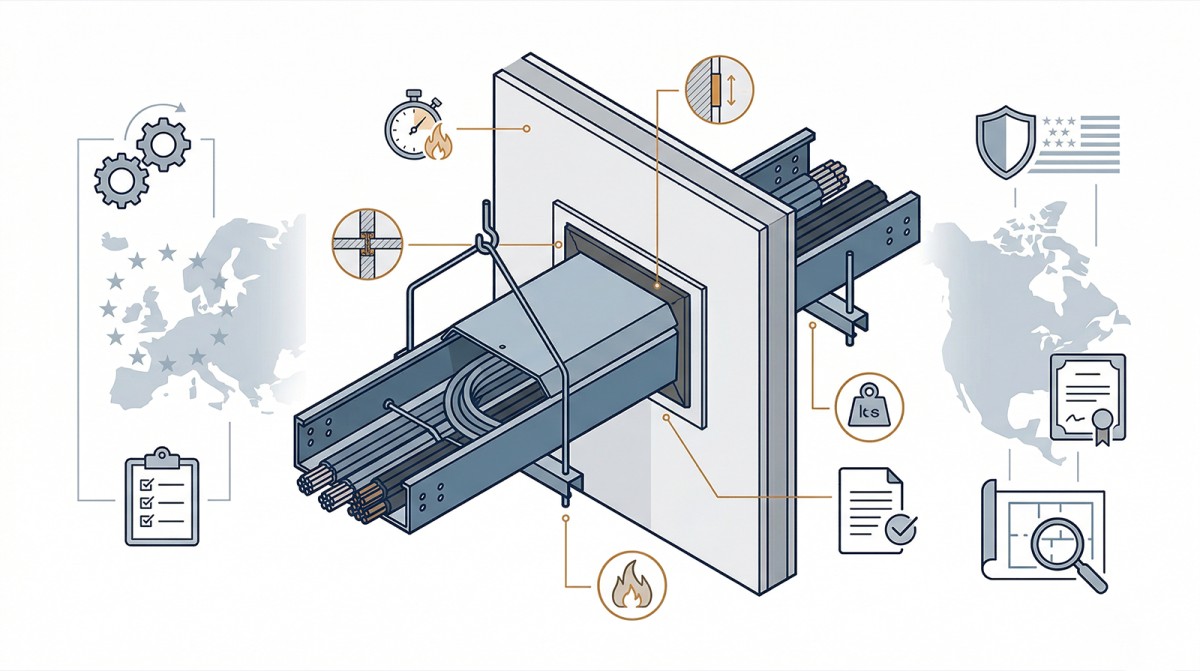
Figure 1. Visual overview of fire-rated cable tray standards and regional compliance requirements.
When fire-rated cable tray requirements appear in a project specification, confusion usually comes from mixing together product standards, installation rules, and fire-test standards as if they were the same thing. They are not. A cable tray may comply with a product standard, an installation code, and a separate fire-performance test requirement at the same time. If those are confused during specification, the result can be redesign, rejected submittals, or the wrong certification package for the project.
What IEC 61537 Actually Covers
IEC 61537 is the IEC product standard for cable tray systems and cable ladder systems. It specifies requirements and tests for systems intended for the support and accommodation of cables and, in some cases, other electrical equipment. It does not apply to conduit systems, cable trunking systems, or cable ducting systems.
That distinction matters. IEC 61537 tells you whether the cable tray system itself meets the relevant product standard for this category. It does not automatically answer every fire-related question a project team may ask, especially when the project specification requires time-rated fire performance, protected cable systems, or certified penetration sealing details.
Where EN 1366 Fits into Fire-Rated Cable Tray Projects
In the European and broader EN framework, fire performance is often addressed through additional EN fire-test standards rather than through IEC 61537 alone. For example, BS EN 1366-11 addresses fire protective systems for cable systems and associated components, while BS EN 1366-3 is commonly referenced for penetration seals.
In practical terms, that means IEC 61537 compliant and fire-rated for this project are not the same statement. One addresses the tray product standard, while the other may require additional evidence tied to fire-protection systems, penetration details, or circuit-protection strategy.
What North America Usually Requires
In North America, the product side is usually framed differently. NEMA VE 1 and CSA C22.2 No. 126.1 specify requirements for metal cable trays and associated fittings designed for use in accordance with the Canadian Electrical Code and the NEC. Installation requirements are then addressed separately through applicable electrical codes, including NEC Article 392 for cable trays.
This is why North American specifications often combine product compliance, installation code requirements, and separate fire-performance expectations. These requirements need to be read together rather than assumed to be interchangeable.
Why UL 2431 Should Not Be the Main Comparison Here
One of the most common specification mistakes is treating UL 2431 as if it were the North American cable tray product standard. It is not. UL 2431 addresses the durability of fire resistive coatings and materials after environmental conditioning. That makes it relevant in passive fire protection discussions, but not as the main product standard for metal cable tray systems.
If a North American project asks for metal cable tray compliance, the conversation usually begins with the correct product and installation framework. If the project also requires fire-resistive circuit integrity, that is a separate requirement and should be specified accordingly.
What About Circuit Integrity Under Fire
If a project requires cables to maintain function during fire exposure, the discussion often moves toward standards such as UL 2196, which evaluates the circuit integrity of fire-resistive power, instrumentation, control, and data cables under fire exposure and hose stream conditions.
This is a different compliance issue from ordinary tray product certification. In other words, a tray product standard and a fire-resistive cable system requirement should not be treated as the same thing.
A Practical Way to Specify Correctly
For projects following the IEC and EN route, start with IEC 61537 for the tray product and then identify the additional fire-test evidence actually required by the project, such as cable-system fire protection or penetration seal testing.
For projects following the North American route, start with the relevant metal cable tray product standard and the applicable installation code, then confirm whether the owner, engineer, or authority having jurisdiction also expects UL listing or separate fire-resistive cable system requirements.
The safest specification language is always explicit. Instead of writing fire-rated cable tray to IEC or UL 2431 cable tray, specify the exact product standard, the exact installation code, and the exact fire-performance requirement the project needs.
Common Specification Mistakes
Mistake 1: Using IEC 61537 as if it alone proves a complete fire-rated assembly.
IEC 61537 is an important product standard, but a project may also require separate fire-test evidence for cable-system protection or penetration sealing.
Mistake 2: Treating UL 2431 as the North American metal cable tray standard.
UL 2431 is not the main product standard for metal cable tray systems. It deals with the durability of fire resistive coatings and materials.
Mistake 3: Requesting UL listed cable tray without clarifying the intended compliance path.
Project teams should distinguish between ordinary tray product listing, fire-protective systems, fire-stop penetrations, and fire-resistive circuit integrity.
Practical Recommendations
If you are working on an international project, write the specification in a way that leaves no room for interpretation. State the exact product standard, identify the regional installation code, and clearly define whether the project also requires fire-protective system testing, penetration-seal testing, or circuit integrity under fire.
It is also good practice to request current certification documents from the supplier and verify that the documented test scope matches the tray type, support method, and project requirement being specified.
Conclusion
Fire-rated cable tray requirements are often misunderstood because different standards serve different purposes. IEC 61537 covers the cable tray product itself. EN fire-test standards may be needed when a project requires protected cable systems or penetration sealing. North American projects usually follow a different product and installation framework, and separate fire-resistive cable requirements may also apply.
The most reliable way to avoid confusion is to identify the exact compliance path your project needs before procurement begins. That means matching the tray product standard, the installation code, and the fire-performance requirement to the project location and specification basis.
Need help matching the right standard set to your project? Contact our team with your project location, code basis, and fire-rating requirement,and we can help you identify the correct compliance path.
Navigation
Send Us A Message
Get in touch with us
Phone