
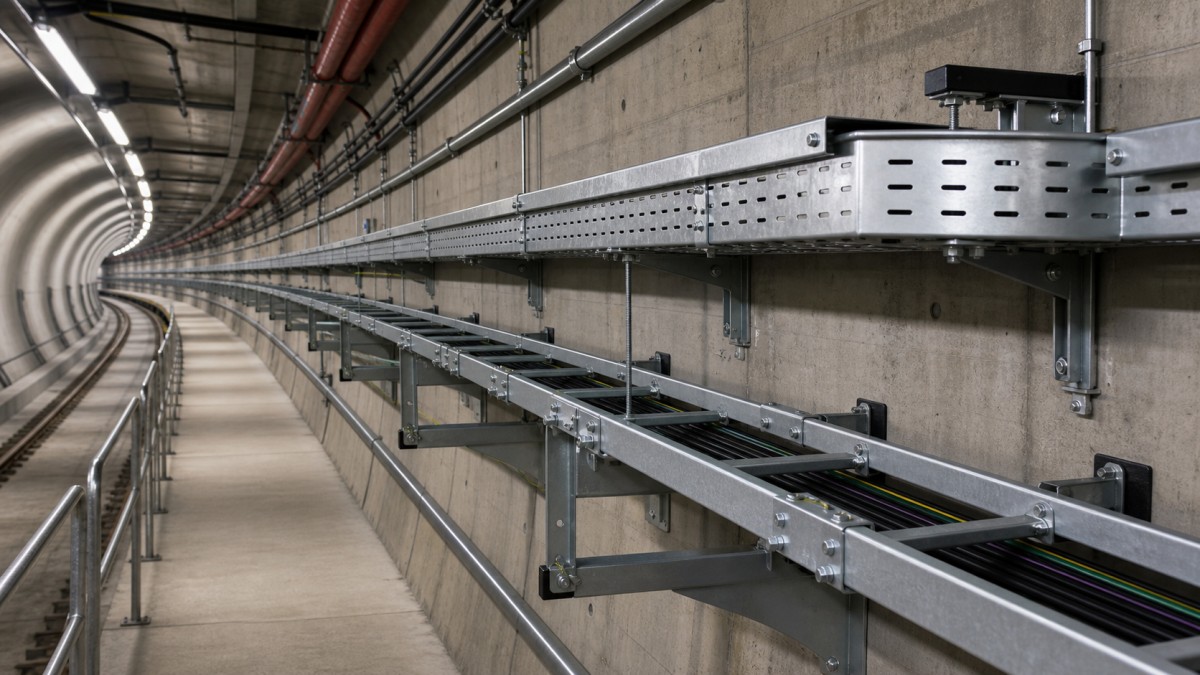
Airports, metro stations, rail depots, passenger terminals, tunnels, and transport service buildings all depend on reliable electrical and communication routes. Cable tray systems support lighting, power distribution, signaling, security, fire alarm, public address, access control, baggage handling, ventilation, pumps, and building management systems. When the cable tray package is incomplete, installation delays can spread across several trades.
Infrastructure buyers often compare cable tray quotations by tonnage or length, but transport projects need a route-based package. Long corridors, changes in elevation, vibration, public-area fire safety requirements, maintenance access, and corrosion exposure all affect the correct tray type and accessories. A good RFQ helps contractors install faster and helps owners maintain the system after handover.
Why Transport Infrastructure Needs a System Approach
Airport and rail projects are usually built in phases. Cable routes may pass through technical rooms, ceiling voids, service corridors, platforms, tunnels, depots, outdoor bridges, equipment rooms, and utility shafts. A tray system that works in one area may not be suitable in another. Outdoor roof routes may require stronger corrosion protection and covers, while indoor technical rooms may prioritize cable density and access.
Many transport projects also involve multiple subcontractors. Power, ELV, fire alarm, security, communication, and mechanical control systems may each require tray space. If the tray schedule does not clearly define separation and capacity, cable pulling becomes difficult and routes can become overcrowded. Coordination with the MEP engineer and installation contractor should happen before procurement.
Cable tray is also a maintenance asset. Airports and rail systems operate for long hours and often cannot shut down large areas for simple cable work. Tray routes should allow inspection and future upgrades without removing unrelated utilities.
Tray Types Commonly Used in Airports and Rail Projects
Ladder Cable Tray
Ladder cable tray is suitable for long power routes, larger feeder cables, plant rooms, depots, and utility corridors. It offers ventilation and flexible cable entry. For outdoor or exposed routes, buyers should confirm cover design, support spacing, wind exposure, and compatible galvanized fittings.
Perforated Cable Tray
Perforated cable tray is often used for smaller power, control, fire alarm, security, communication, and building systems. It provides more continuous cable support than ladder tray while still allowing drainage and reducing weight. Covers may be required in public-adjacent areas or dusty service routes.
Cable Trunking
Cable trunking can be useful where cables need more enclosure, such as control rooms, equipment rooms, commercial interiors, ticketing areas, or routes needing a cleaner appearance. The design should include access covers, cable exit points, and enough space for future circuits.
Wire Mesh Cable Tray
Wire mesh cable tray may be selected for low-voltage, data, and communication routes where lightweight installation and frequent cable changes are expected. It should be reviewed for load, support spacing, cable protection, and local project preferences.
Material and Finish Selection
Transport infrastructure can include dry indoor rooms, humid tunnels, coastal airports, outdoor canopies, plant decks, and underground service areas. Finish selection should follow the actual route environment rather than a single project-wide assumption.
Support and Access Details That Affect Installation
Support design is critical because transport routes often share space with ducts, pipes, lighting, sprinklers, signage, and structural elements. Buyers should ask whether supports are included and whether they match the tray finish. A tray quotation without supports, splice plates, and fittings is not a complete system quotation.
- Confirm bracket type, threaded rod size, cantilever arms, strut channel, and anchor interface.
- Define support spacing based on tray type, expected cable load, and project requirements.
- Include horizontal bends, vertical bends, tees, crosses, reducers, end plates, and covers.
- Check whether routes need hold-down clamps, especially in outdoor, vibration, or seismic areas.
- Leave working space for cable pulling, inspection, and future replacement.
- Coordinate tray elevation with ducts, pipes, doors, access panels, and equipment removal paths.
RFQ Checklist for Infrastructure Buyers
Because airport and rail projects involve many routes, the RFQ should be structured by area or system. This makes pricing clearer and helps suppliers pack goods for site installation.
- Project area list: terminal, platform, tunnel, depot, plant room, outdoor route, or control room.
- Tray type and size by route, including width, side height, thickness, and standard length.
- Material and finish by environment, including requirements for accessories and supports.
- Fittings schedule: bends, tees, reducers, crosses, covers, drop-outs, end caps, and splice plates.
- Support package: brackets, strut channel, threaded rods, clamps, anchors, and fasteners.
- Packing and labeling: route number, floor or zone, bundled fittings, and spare hardware.
Delivery Planning and Site Storage
Transport infrastructure projects often have limited storage space. Deliveries may be split by station, floor, tunnel section, depot building, or construction phase. If all cable tray is packed as one general shipment, the site team may spend unnecessary time sorting fittings and moving long bundles across the project. A better procurement plan labels packages by route or zone and separates accessories that belong to each section.
Buyers should also confirm how the tray will be protected during sea freight, inland transport, and site storage. Galvanized surfaces can be scratched if bundles are dragged or mixed with loose steel parts. Stainless steel tray should be protected from contamination by ordinary carbon steel during handling. Covers, splice plates, and fasteners should be counted and packed clearly because small missing items can stop a long cable pulling sequence.
For phased airport and rail work, spare accessories are useful. Extra splice plates, bolts, nuts, washers, end caps, and a small allowance of brackets can reduce delays when site conditions change. The spare quantity should be controlled, but it is usually more efficient than arranging urgent international shipments for small hardware.
Documentation should travel with the goods. A packing list, route labels, finish description, and accessory schedule give the contractor a faster way to check deliveries before installation begins.
Final Buying Advice
Airports and rail transit projects need cable tray systems that are easy to install, inspect, and expand. Buyers should avoid purchasing tray lengths without a full accessory and support package. The better approach is to quote by route, environment, and system requirement.
HONGFENG / Cable Tray Pro supplies ladder cable tray, perforated cable tray, cable trunking, wire mesh cable tray, galvanized tray, stainless steel tray, and matched accessories for infrastructure projects. Send your route drawings, quantity list, finish requirement, and packing needs to prepare a practical quotation for your project team.