
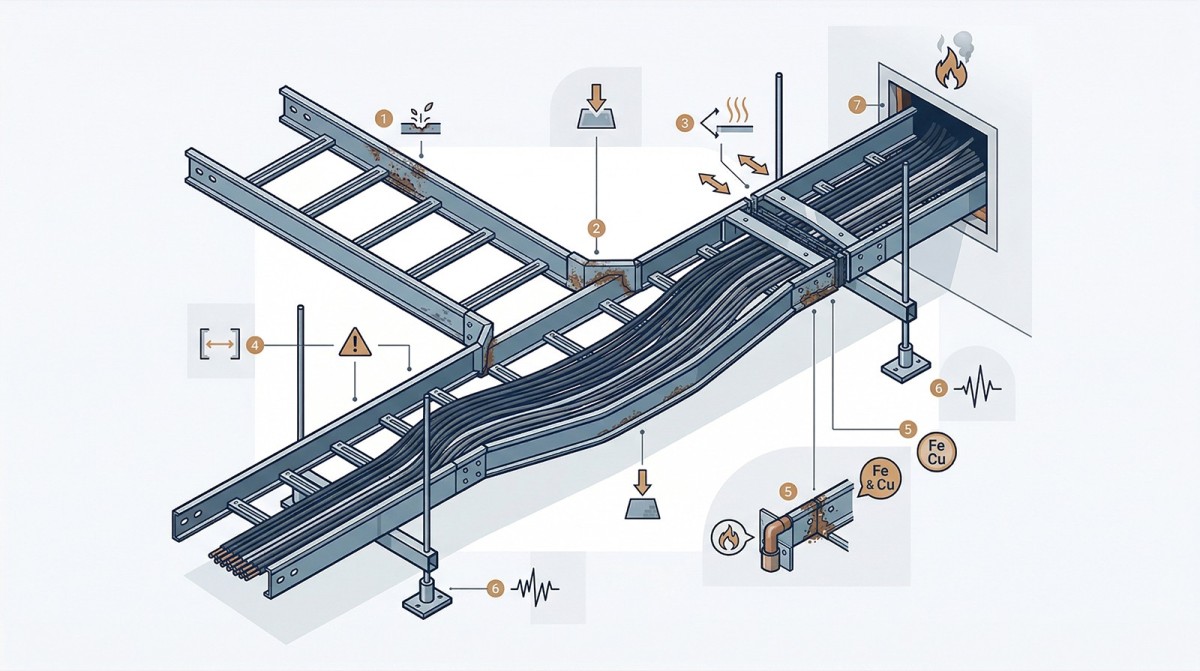
Figure 1. Technical overview of seven preventable cable tray failure risks in industrial and commercial projects.
Cable tray failures rarely happen without warning. In most cases, they develop over time as a result of specification mistakes, installation shortcuts, or maintenance gaps that were never properly addressed. When failure finally becomes visible, the consequences can be serious, including production interruptions, safety risks, cable damage, and repair costs far higher than the original installation budget.
The good news is that many of these failures are preventable. By understanding the most common failure patterns and the engineering decisions behind them, project teams can reduce risk before a system is installed and extend service life after commissioning.
Below are seven common cable tray failure scenarios and the practical steps that can help prevent them.
1. Corrosion-Related Structural Failure
What happened:
A cable tray system installed in a corrosive outdoor environment began to show visible rust, coating breakdown, and material deterioration much earlier than expected. Over time, structural strength was reduced, and sections of the tray became unreliable under normal cable load.
Root cause:
The selected material and surface treatment were not suitable for the installation environment. Coastal, marine, petrochemical, wastewater, and chemically aggressive locations often demand stronger corrosion resistance than standard galvanized finishes can provide.
Prevention:
Material selection should always match the environment. In highly corrosive conditions, stainless steel or FRP cable trays may be more appropriate than standard galvanized steel. A basic environmental assessment during specification, including humidity, chloride exposure, chemicals, and temperature, can prevent this kind of mismatch from the beginning.
2. Overloading Beyond Design Capacity
What happened:
A tray system that originally performed well gradually became overloaded as new cables were added over time. Because the additions were made without checking structural capacity, sections of the tray began to sag, supports showed visible stress, and the system moved closer to failure.
Root cause:
Cable additions were based on available space rather than verified load capacity. In many facilities, tray systems are expanded gradually, but without a formal process for checking load limits, the original design can be exceeded.
Prevention:
Every tray system should have a documented method for tracking cable additions against design capacity. Load and fill levels should be reviewed before major changes are made. Manufacturer load tables and project design data should be referenced whenever new cables are added to an existing run.
3. Thermal Expansion Damage on Long Outdoor Runs
What happened:
A long outdoor cable tray run developed joint separation, distortion, and alignment problems after repeated exposure to high daytime temperatures and cooler nighttime or seasonal conditions.
Root cause:
Thermal expansion was not properly considered during design. Over long distances, temperature changes can cause measurable movement in the tray system, especially for materials such as aluminum.
Prevention:
Expansion joints and movement allowances should be included based on tray material, run length, and expected temperature range. Outdoor systems in regions with large temperature variation require particular attention. Proper design for thermal movement can prevent buckling, failed joints, and support stress.
4. Inadequate Support Spacing
What happened:
A cable tray run began to sag between supports after installation, especially once heavier power cables were added. In some cases, excessive deflection also increased the risk of cable insulation damage and long-term structural fatigue.
Root cause:
Support spacing was based on habit or installer preference rather than engineering calculation. The combined weight of the tray, cables, and accessories exceeded what the installed span could reliably support.
Prevention:
Support spacing should always be determined using the tray profile, cable load, accessory load, and manufacturer load/span tables. Even a well-made tray system can fail if support intervals are too wide for the actual installed load.
5. Galvanic Corrosion from Mixed Metals
What happened:
Corrosion developed at tray mounting points and connection hardware where dissimilar metals were in contact in a damp environment. The damage was concentrated around fasteners, brackets, and interfaces between materials.
Root cause:
Galvanic corrosion occurs when different metals are in contact in the presence of moisture or another conductive medium. When tray material, fasteners, and supports are not properly matched or isolated, accelerated corrosion can occur at connection points.
Prevention:
Use compatible materials wherever possible, and isolate dissimilar metals with suitable non-conductive components such as nylon washers, rubber gaskets, or other approved separators. Fasteners, brackets, and support structures should be selected as part of the full corrosion-control strategy, not as an afterthought.
6. Seismic Damage from Non-Compliant Installation
What happened:
A cable tray system in a seismic zone suffered joint separation, displaced cables, and support failure during seismic movement. The tray itself may have been structurally sound, but the overall installation was not designed to resist lateral and dynamic forces.
Root cause:
The system did not include the bracing, retention, or connection details required for seismic performance. Standard installation methods are not always suitable for projects in seismically active regions.
Prevention:
Where seismic requirements apply, cable tray systems should be designed and installed using appropriate bracing, reinforced connection methods, cable restraint, and movement allowances. Seismic design should be addressed early in the project rather than added later as a correction.
7. Fire Spread Through Unsealed Penetrations
What happened:
A fire spread from one room or floor to another through cable tray penetrations in fire-rated walls or slabs. Although the tray routing itself was complete, the penetrations around the tray were not properly sealed.
Root cause:
Fire-stop systems were omitted, incorrectly installed, or not restored after cable additions. Cable tray penetrations can create a path for smoke, heat, and flame if they are not protected as part of the building fire strategy.
Prevention:
Every penetration through a fire-rated wall or floor should be sealed using tested and approved fire-stop systems that match the project requirements. These penetrations should also be checked again whenever cables are added, removed, or modified after the initial installation.
The Common Pattern Behind These Failures
Although these failures appear different on the surface, most of them come back to the same issue: the system installed in the field did not fully match the real demands of the environment, load condition, or compliance requirement.
Cable tray failures are rarely mysterious. They are usually the result of one of four gaps:
- the wrong material for the environment
- the wrong support or load assumptions
- missing allowances for movement or external forces
- incomplete inspection and maintenance after installation
When these gaps are addressed early, cable tray systems can perform reliably for many years in demanding industrial and commercial environments.
How to Reduce Failure Risk in Practice
The most effective way to prevent cable tray failure is not complicated. Project teams should:
- select materials according to the installation environment
- verify load and support spacing before installation
- consider thermal movement, seismic conditions, and fire-stop requirements where applicable
- document system changes after commissioning
- inspect installed systems periodically rather than waiting for visible damage
Good specification, disciplined installation, and routine inspection prevent far more failures than emergency repair ever can.
Conclusion
Cable tray failures are often preventable long before they become expensive. Corrosion, overloading, poor support spacing, thermal movement, mixed-metal contact, seismic weakness, and unsealed penetrations are all known risks in real projects. The key is to recognize them early and design against them from the start.
A reliable cable tray system is not only about choosing a tray type. It is about choosing the right material, the right support strategy, the right installation method, and the right inspection discipline for the environment it will serve.
Concerned about your cable tray specification or installation plan? Contact our team for technical support and project-based recommendations.
Navigation
Send Us A Message
Get in touch with us
Phone