
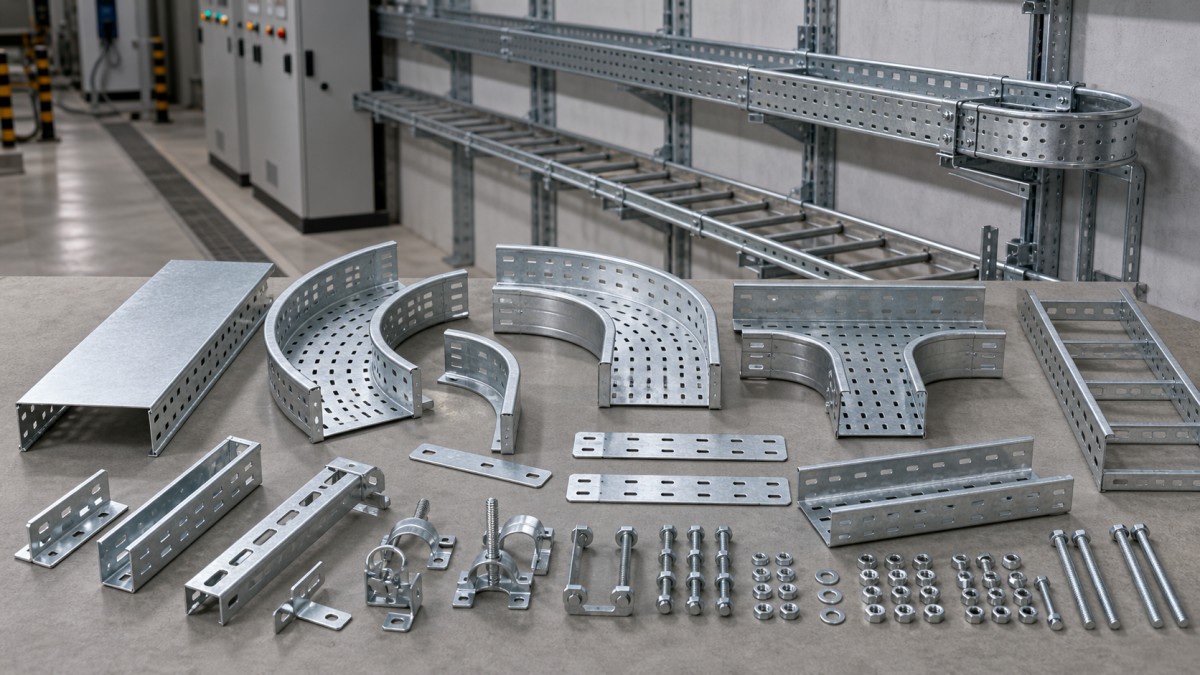
Cable tray projects are often delayed not because straight tray lengths are missing, but because accessories and supports were not specified clearly. A shipment may include the correct meters of ladder tray or perforated tray, yet the contractor still cannot complete installation without bends, tees, splice plates, covers, brackets, clamps, fasteners, reducers, or grounding-related parts.
For B2B buyers, EPC teams, electrical distributors, and overseas procurement managers, cable tray accessories should be treated as part of the system, not as optional extras. A complete RFQ reduces site changes, urgent air freight, mismatched materials, and installation downtime. This guide explains what buyers should include before placing a cable tray order.
Why Accessories Matter More Than Buyers Expect
A cable tray route is rarely a straight line. It changes direction, rises or drops, passes around equipment, enters rooms, crosses structural members, and connects to panels or machinery. Every route change needs a fitting or a properly engineered field detail. If the quotation only includes straight sections, installers may cut and modify tray on site, which can reduce finish quality and slow the project.
Accessories also affect corrosion performance and mechanical strength. A hot-dip galvanized tray route should use compatible galvanized fittings and supports. A stainless steel route in a coastal or chemical environment should not rely on ordinary carbon steel fasteners. The system is only as reliable as its weakest component.
Route Fittings Buyers Should Identify
Route fittings allow the cable tray system to follow the actual project layout. They should be counted from drawings or a route sketch before ordering.
Horizontal Bends
Horizontal bends change direction in plan view. They are used around corners, equipment, walls, and structural columns. Buyers should specify angle, tray width, side height, and bend radius where required by cable size.
Vertical Bends
Vertical inside and outside bends allow the tray route to rise or drop. They are common near equipment rooms, cable shafts, rooftop transitions, and pipe racks. The bend radius should match cable pulling and cable protection requirements.
Tees, Crosses, and Reducers
Tees and crosses are needed when routes branch. Reducers connect different tray widths. These fittings are especially important for factories, data rooms, utility corridors, and infrastructure projects where cable routes split to multiple loads.
End Plates and Drop-Outs
End plates close the tray route where needed. Drop-out fittings or cable exit protection may be required where cables leave the tray. These details reduce cable edge damage and make installation cleaner.
Support Components and Structural Coordination
Supports hold the tray at the correct height and spacing. They must match the cable load, tray type, building structure, and installation environment. A tray with strong load capacity can still sag or vibrate if the support system is poorly specified.
Covers, Barriers, and Separation Parts
Covers protect cables from falling objects, sunlight, dust, accidental contact, or selected environmental exposure. They can be useful outdoors, under process equipment, or in public-access areas. However, covers should not be added automatically. They can reduce ventilation, trap moisture, and add installation labor. The project engineer should decide where covers are useful.
Barriers separate cable groups inside the same tray. They may be used where power, control, communication, or instrumentation cables need physical separation. Buyers should specify barrier height, length, material, and fixing method. If separation is important, it should appear in the RFQ instead of being left to site judgment.
Splice Plates, Fasteners, and Bonding Details
Splice plates and couplers connect tray sections. Bolts, nuts, washers, and clamps are small items, but they are essential. Missing fasteners can stop installation even when all tray lengths are on site. Material compatibility is important for corrosion performance, especially in outdoor, coastal, stainless steel, or chemical environments.
Grounding and bonding requirements depend on the project design and local code. Buyers should not invent requirements, but they should ask whether bonding jumpers, grounding washers, or related components are required by the project specification. If these parts are needed, include them in the quotation and packing list.
How to Build a Better Cable Tray RFQ
- Provide route drawings, sketches, or a bill of materials by area.
- List tray type, width, side height, thickness, length, and surface finish.
- Include all bends, tees, crosses, reducers, risers, end plates, covers, and barriers.
- Specify support type, support spacing, bracket finish, and expected cable load.
- Confirm fastener material and whether accessories must match tray finish.
- Ask for packing lists by route or installation zone.
- Include spare fittings and fasteners for site adjustment where appropriate.
Common Procurement Mistakes
One common mistake is comparing quotations only by straight tray length. A supplier that includes fittings and supports may look more expensive at first, but may reduce the real installed cost. Another mistake is accepting mismatched accessories. For example, stainless steel tray with ordinary fasteners or outdoor galvanized tray with indoor-grade brackets can create corrosion problems.
Buyers should also avoid vague descriptions such as “complete accessories included” without a list. A clear accessory schedule is better than a general promise. It allows both buyer and supplier to confirm what is included before production and shipment.
Another common issue is failing to order spare fasteners and small fittings. Site teams often need minor route adjustments after checking actual structure, pipework, or equipment position. A small allowance of spare bolts, splice plates, brackets, cover clamps, and reducers can reduce stoppages without significantly changing the project budget.
For overseas shipments, accessory packaging should be discussed before production is finished. If all bolts, clamps, and brackets are packed loosely in one large box, the contractor may spend valuable time sorting parts. Packing by route, floor, equipment area, or tray size makes receiving inspection and installation much easier.
Buyers should also keep revision control in mind. If drawings change after the first quotation, the accessory list should be updated with the same revision number as the tray layout. This avoids a common situation where straight tray quantities are revised but bends, reducers, and supports still follow an older drawing.
Final Buying Advice
A cable tray system is more than tray length. Accessories and supports determine whether the route can be installed cleanly, safely, and on schedule. Before ordering, buyers should review route changes, support methods, covers, barriers, fasteners, and finish compatibility.
HONGFENG / Cable Tray Pro can supply cable tray bodies, bends, tees, reducers, covers, brackets, splice plates, fasteners, hold-down clamps, and other accessories for industrial, commercial, infrastructure, and renewable energy projects. Send us your tray layout or bill of materials, and our team can help prepare a complete quotation.